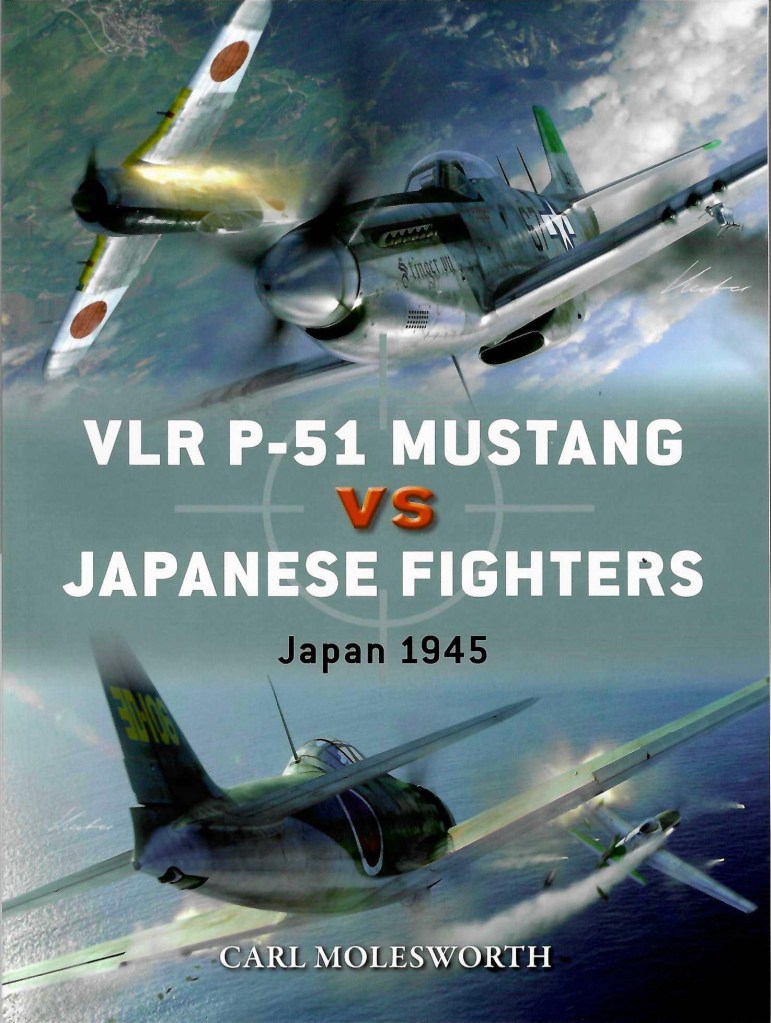
Book Review: VLR P-51 Mustang vs Japanese Fighters, Japan 1945 by Carl Molesworth

Gareth Hector/Osprey Publishing

Published in 2025 by Osprey Publishing as part of their Duel Series (#147), this softbound book has 80 pages. Written by noted aviation historian and author, Carl Molesworth, the book focuses on the air war over Japan as fought by United States and Japanese pilots from April 7, 1945 through the end of World War II, and covers combat between the North American P-51D Mustang and the following Japanese fighters: Mitsubishi A6M5 Reisen (Zeke), Mitsubishi J2M3 Raiden (Jack), Kawanishi N1K2-J Shiden-Kai (George), Nakajima Ki-44 Shoki (Tojo), Kawasaki Ki-61 Hein (Tony), Nakajima Ki-84 Hayate (Frank), and Kawasak Ki-100 Goshikisen.

The stunning cover artwork above and the battle scene artwork below were created by Scottish digital artist, Gareth Hector.

Gareth Hector/Osprey Publishing

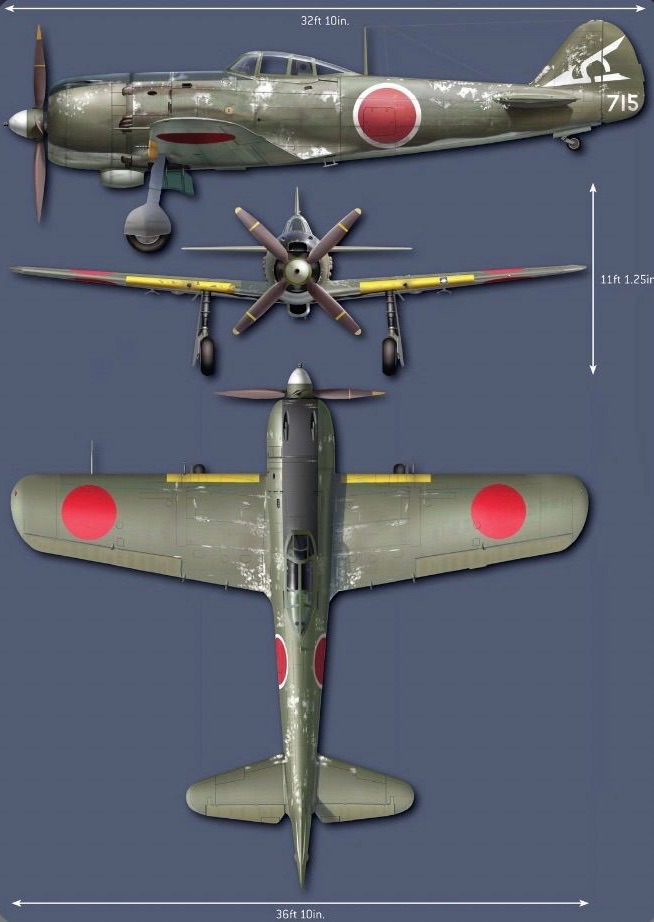
As is customary with Osprey aviation titles, airplane profiles and cockpit and armament views by Jim Laurier are included. The profiles and cockpit and armament views are all very nicely done as can be seen from the profile of the Nakajima Ki-84-I Hayate (Frank).
The text is supplemented with numerous photographs, many from the private collections of combatants who dueled over the skies of Japan.

Airplane profiles are provided for the North American P-51D Mustang and the Nakajima Ki-84-I Hayate (Frank). Cockpit views are provided for the Mustang and the Nakajima Ki-44 Shoki (Tojo). Armament views are provided for the Mustang, the Mitsubishi A6M5 Reisen (Zeke), Kawanishi N1K2-J Shiden-Kai (George), Nakajima Ki-44-IIb Shoki (Tojo), and Kawasaki Ki-61-Ia Hein (Tony).

After an introductory chapter, Chapter 2 addresses the design and development of each fighter aircraft. Right before this chapter, is a nice three page chronology spanning from 1939 to 1945 which touches upon the significant dates in the development of each plane. Chapter 3 discusses the technical specifications for each plane with the armament views for the planes identified above.

Chapter 4 discusses the strategic situation in 1945 including the build up of the United States Army Air Force’s B-29s on the Mariana Islands and the establishment of airstrips on Iwo Jima for the three VLR Mustang groups. Chapter 5 focuses on the combatants and contrasts the effectiveness of pilot training between the United States and Japan at that point in the war, and the organization and tactics of each air force.

Chapter 6 is where everything comes together and Mr. Molesworth discusses the actual aerial combats over the Japanese homeland. Specifically discussed are the escort or strike missions on the following dates: April 7, 1945, April 12, 1945, April 19, 1945, May 29, 1945, June 10, 1945, June 23, 1945, July 9, 1945, July 16, 1945, August 3, 1945, and August 10, 1945.

Chapter 7 discusses statistics and gives a brief analysis, and Chapter 8 gives an aftermath discussing the Japanese fighter planes that survived the war and where they are located.

If you are interested in the air war in the Pacific Theater of Operations or the air war over Japan in the closing months of the war, this book is highly recommended. Kudos to Carl Molesworth and Osprey Publishing!
Kits News: Update on the Development and Projected Release Date of Zoukei-Mura’s 1/32nd scale Kawasaki Ki-100-1 “Goshikisen”

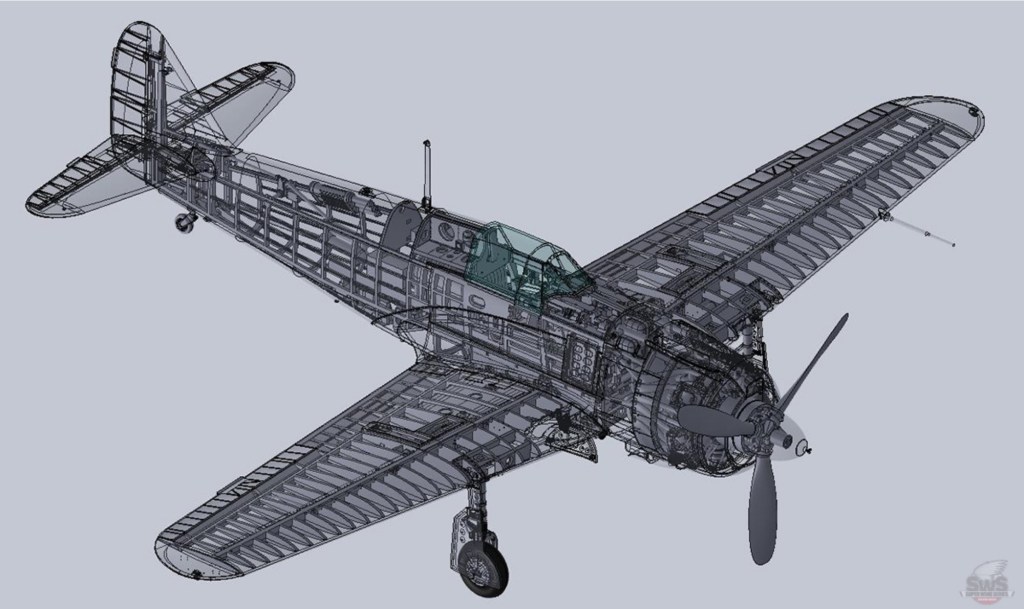
Zoukei-Mura recently updated the modeling community regarding the continued development and projected release date of its much anticipated 1/32nd scale Kawasaki Ki-100-1 Goshikisen. In the “Old Man Blog” No. 135, Hideyuki Shigeta, the President of Zoukei-Mura, indicates “if all goes well”, they may be able to deliver at it the end of this year or early 2026.

Zoukei-Mura

It appears from the CAD drawings on the blog, we will be getting the “Ko” version first, which is the razorback version of this important World War II fighter. Radu Brinzan has confirmed that Zoukei-Mura will also be producing the “Otsu” version as well. As can be seen by the CAD drawings, they will continue their business model of providing the modeler with a lot of internal structure and detail.

Zoukei-Mura

No matter when these kits are released, they will provide modelers with the first 1/32nd scale full kits of this important late war Japanese fighter. Kudos to Zoukei-Mura!

Kits News: Zoukei-Mura 1/32 Kawasaki Ki-100-1 Otsu “Goshikisen”

At the end of March, Zoukei-Mura presented a mock-up of a 1/32 Kawasaki Ki-100-1 Otsu “Goshikisen” along with some CAD drawings. The news quickly appeared on both Brit Modeller and Large Scale Planes’ forums and was enthusiastically received.

Zoukei-Mura

Part of the enthusiasm is due to the fact that no mainstream model manufacturer has released either the Ki-100 Otsu (fastback) or the Ki-100 Ko (razorback) in 1/32 scale. While kits have been produced in 1/48th scale (Hasegawa and Otaki/Arii) and 1/72nd scale (Aoshima, Fine Molds and RS Models), there have been absolutely no injection molded kits in 1/32nd scale.

Zoukei-Mura

If you wanted to build either plane in 1/32 scale, you had to buy the 1/32 Hasegawa Kawasaki Ki-61 Hien (Tony) kit, and one of the Alley Cat resin conversion sets. Those conversion sets are no longer in production, but once the Zoukei-Mura kits are released, I am assuming we will see some of the Alley Cat conversion sets for sale on eBay.

Zoukei-Mura

The Ki-100 was a Ki-61-II airframe mated with the reliable Mitsubishi Ha-112-II Kinsei radial engine. The result was an very agile and maneuverable fighter with a good rate of climb and excellent handling characteristics. It was considered superior in all respects to its predecessor, the Ki-61 Hien. The Ki-100 was also considered by some Japanese pilots who flew both types to be superior to the Nakajima Ki-84 Hayate. It was first flown in February 1945, and the IJAAF began equipping units with the Ki-100 in March 1945, albeit in very limited numbers.

Kawasaki Ki-100-1 Ko “Goshikisen”

Due to its late entry into the war, the Ki-100 was not given a code name by the Allies, and its performance characteristics were unknown to the United States Army Air Force and the United States Navy. Anecdotal accounts suggest that the Ki-100s may have been misidentified as Ki-84s due the the fact that both had radial engines. There was no Ki-100 captured during the war for evaluation, and there were no evaluations after the cessation of hostilities to determine how it compared with the Navy’s Corsairs and Hellcats and the Army Air Force’s Lightnings, Mustangs and Thunderbolts.

Kawasaki Ki-100-1 Otsu “Goshikisen”

While the Ki-100 did not have a significant impact in the air war over Japan due to is late entry into combat, it provided the Imperial Japanese Army Air Force with a very capable dogfighter in the hands of an experienced fighter pilot. One wonders what impact it would have had if it had been supplied in sufficient numbers and flown by experienced fighter pilots. Unfortunately, from an historical perspective, it falls into the category of “too little, too late.”

Zoukei-Mura

Radu Brinzan has confirmed that Zoukei-Mura intends to release both the Ko (razorback) and Otsu (fastback) versions of the Ki-100 as supported by the above CAD drawings. That is great news!

When these kits will be released is unknown. Zoukei-Mura has previously announced a line of five Fw-190 kits, an Ar-234 kit, and a P-51B/C kit. It may be a while, but definitely worth the wait.