Kits-World makes a number of very nice decal sheets in both 1/72nd and 1/48th scale for modelers who are building either the 1/72nd Academy or the 1/48th Monogram Boeing B-29A Superfortress.
Decals for one of those B-29s, Thumper (Serial Number 42-24623), are provided in both 1/72nd scale (KW172133) for the Academy kit and in 1/48th scale (KW148142) for the Monogram kit.
Kits-World Decals
The other set of decals on these sheets are for Sic ‘Em!, a 343rdBS/598th BG B-29 while stationed at Yokota, Japan during the Korean Conflict.
Kits-World Decals
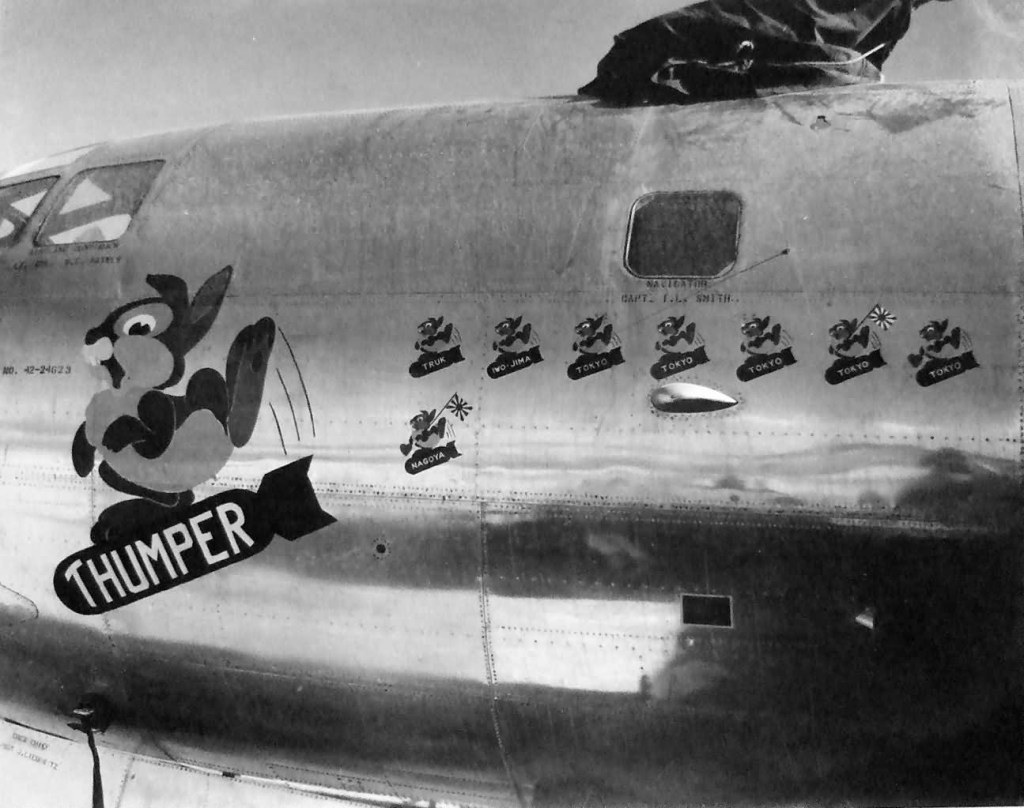
As can be seen from the photos below, Thumper’s mission symbols were a smaller version of the cartoon character nose art with the name of the target location printed on the bomb. Aerial victories were noted by a Japanese flag on a flag pole carried by cartoon character.
Thumper on Mariana Islands (via World War Photos)
Missions with multiple aerial victories were noted by the same number of flags on one or two flag poles. By the end of its tour, the crew of Thumper would claim 26 aerial victories. I could not find a photo of the right side of the nose during Thumper’s time in the Marianas to determine if the nose art was on both sides of the nose. Kit-World provides two decals of the nose art so if you are so inclined to put it on both sides of the nose, you can. Nice touch on Kit-World’s part.
Thumper and crew on the Mariana Islands (via Wings Over New Zealand Aviation Forum)
As you can see, the art work for both sets of markings looks really good. In addition, the printing of the decal sheet is very well done and in register. A complete set of national insignia are provided for both planes.
Kits-World Decals
Thumper was also significant in that it was the first Marianas based B-29 to complete 40 bombing missions. In late July of 1945, Thumper and its crew were sent home for a short-lived war bond tour. The two photos below are of Thumper while on the war bond tour. Please note a few changes. First, the mission and aerial victory symbols have changed to the traditional mission and aerial victory symbols. Gone are the mini-Thumpers riding a bomb and holding flag poles with flags to denote the missions and aerial victories.
Thumper and crew on War Bond Tour (via World War Photos)
Second, the plane number “21” has been painted on the nose. I could not find any Marianas based pictures that showed the plane number painted on the nose, so it is difficult to determine when that change was made. Third, in the picture below, it shows that both the nose art and the mission and aerial victories symbols are on the right side of the nose, as well as the left side of the nose. The Kits-World decal sheet only provides the mission and aerial victory for one side of the nose of the war bond tour Thumper.
Thumper on War Bond Tour (via National Museum of the United States Air Force)
This is a very nice decal sheet with only one short coming as noted above. Highly recommended if you intend to build the Marianas based Thumper.
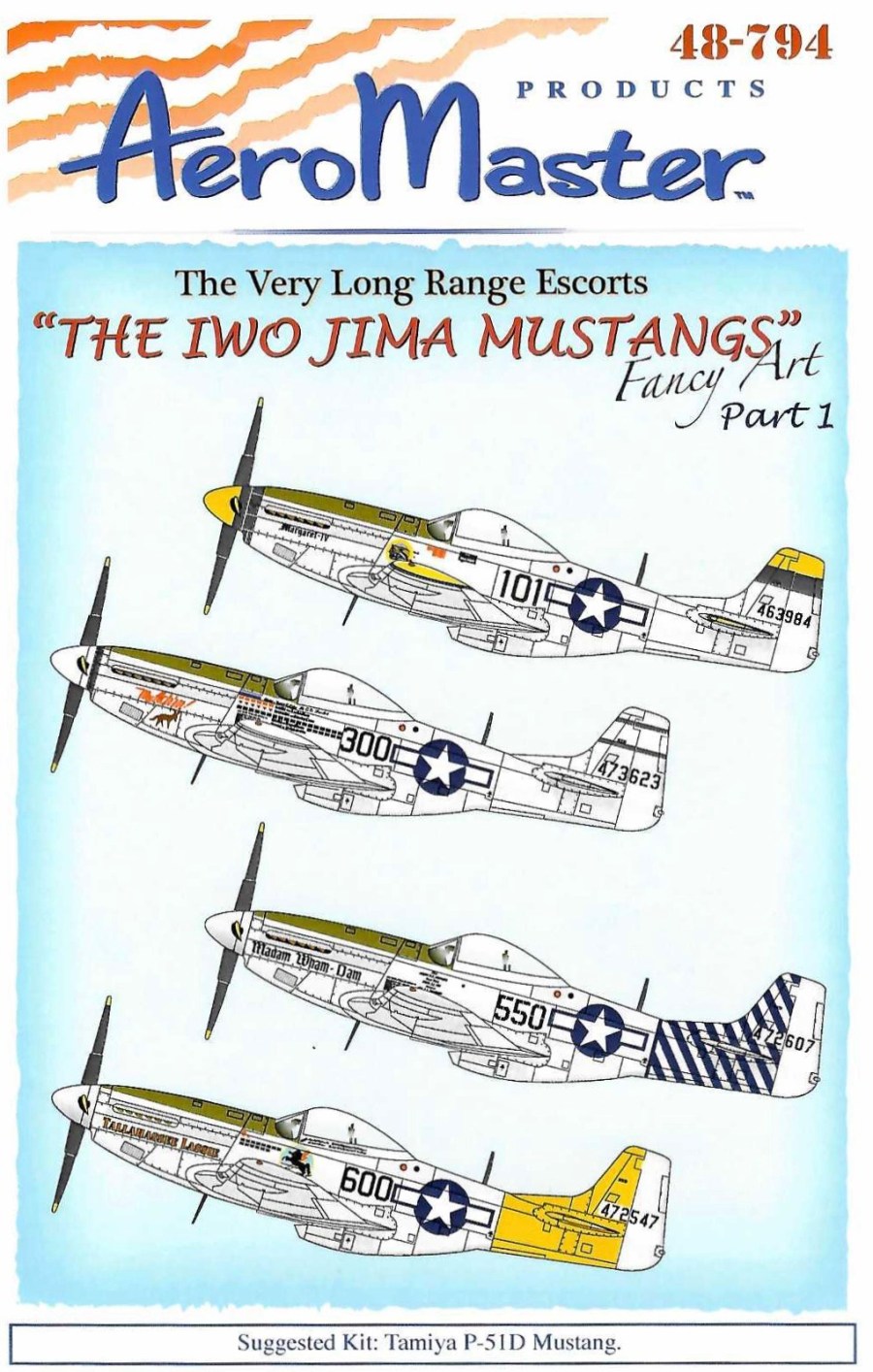
This is AeroMaster’s second decal sheet dedicated solely to Iwo Jima VLR Mustangs. Three additional sheets on Iwo Jima VLR Mustangs would be subsequently issued by AeroMaster under the series “The Very Long Range Escorts ‘The Iwo Jima Mustangs’ Fancy Art.”
AeroMaster Decals
This sheet provides markings for the planes of two VLR aces: Major James B. Tapp’s 101 “Margaret – IV” (8 aerial victories), and Major Harry C. Crim, Jr.’s 300 “My Achin! [Ass]” (6 aerial victories).
AeroMaster Decals
The sheet also provides markings for the planes of two 506th FG squadron commanders: Major Harrison E. Shipman’s 550 “Madam Wham-Dam” (458th FS), and Major Thomas D. DeJarnette’s 600 “Tallahassee Lassie” (462nd FG).
AeroMaster Decals
Originally issued in 2005, the decals look good, are in register and are for the most part accurate. Photo documentation that has recently emerged shows there are a few omissions and errors on this sheet, but this is still a very nice decal sheet.
AeroMaster Decals
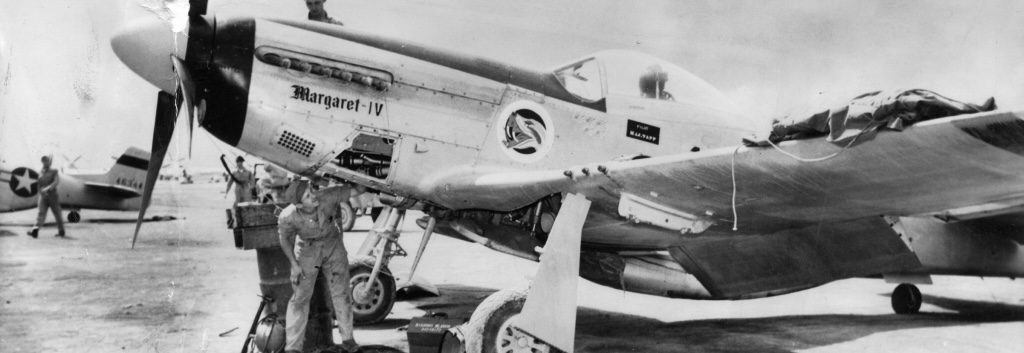
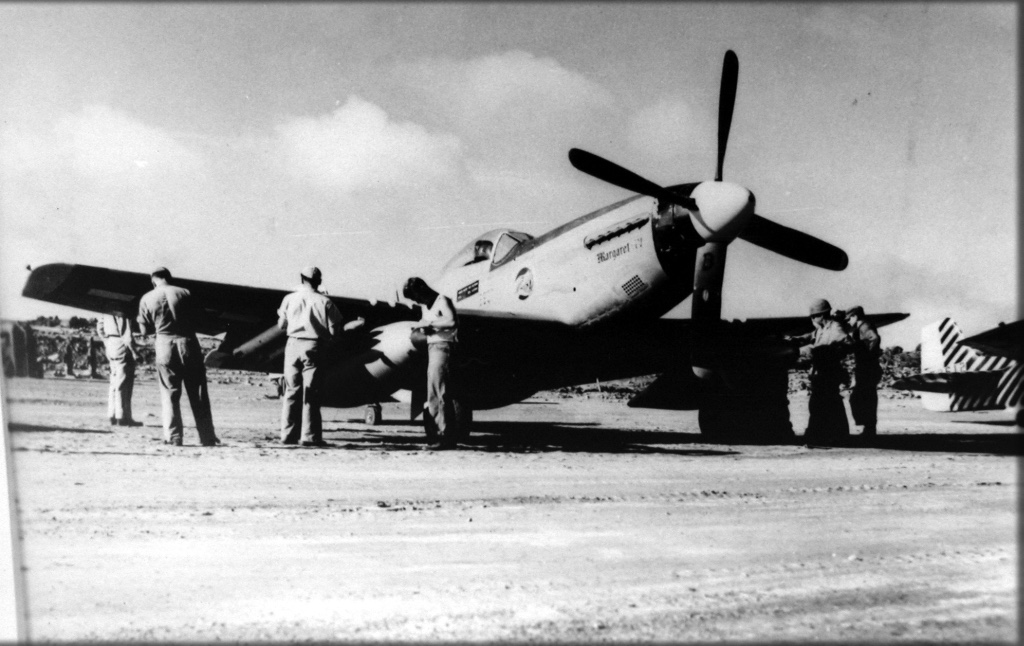
Major James B. Tapp (78thFS/15th FG) – Major Tapp was the second highest scoring VLR Mustang ace with 8 aerial victories. All eight victories were scored in 101 “Margaret – IV” (44-63984), a P-51D-20NA. Major Tapp scored 4 aerial victories on the first VLR mission on April 7, 1945. He scored another victory on April 12, 1945, which represents the 5 victories on the decal sheet.
Major James B. Tapp’s 101 Margaret-IV (7th Fighter Command Association/Mark W. Stevens)
As can be seen from the photo above and the photo below, the name “Margaret – IV” and the Bushmaster squadron emblem are on both sides of the nose. The photo below shows that there are additional markings on the right side of the fuselage below the canopy.
Major James B. Tapp’s 101 Margaret-IV (7th Fighter Command Association/Mark W. Stevens)
This last photo shows the markings on the right side of the fuselage which includes kill and mission markings. In addition to the name of the Crew Chief Sergeant Blanco, there is the name of another ground crew member which is undiscernable from the photo. This photo also shows that the 0 in the fuselage number is broken rather than solid.
Crew Chief Sgt. Blanco on the wing of Major James B. Tapp’s 101 “Margaret-IV” with unknown crew member in cockpit (Brian Walter)
Unfortunately, the kill and mission markings on the right side of Major Tapp’s Mustang are not contained on this decal sheet. The most accurate and complete decals for 101 “Margaret – IV” are found in the Eduard kits.
Major Harry C. Crim, Jr. (531st FS/21st FG) – Major Crim was the 3rd highest scoring VLR ace with six confirmed victories, and the only fighter ace of the 21st FG. He joined the 21st FG in August, 1944, after serving with the 14th Fighter Group in Tunisia flying the Lockheed P-38 Lightning. Unable to score any aerials victories with 14th FG, he scored his first two victories, a Kawasaki Ki-61 “Tony” and a Kawasaki Ki-45 “Nick” on April 7, 1945, the first VLR mission flown by the 7th Fighter Command Mustangs. His last victory, a Mitsubishi A6M Zero, came on July 6, 1945 during a strike mission against Atsugi airfield. Major Crim was also credited with six ground victories.
Assistant Crew Chief Sergeant Stanley McCarro in the cockpit of Major Crim’s 300 “My Achin! [Ass]” (Harry Crim via Tom Ivie/Carl Molesworth)
44-73623 was a P-51D-25NA, and Major Crim’s second VLR Mustang. The kill markings, mission markings, and ground crews’ names appear to be very good on the decal sheet except for Asst. Crew Chief Stanley McCarro’s name being misspelled. The only other deficiency in these decals is the artwork for the donkey/ass.
Major Harry C. Crim Jr.’s 300 “My Achin! [Ass]”
The photo above shows a portion of the canvas wheel well covers which were a standard production feature that were discarded by European Theater Mustang groups, but were maintained in place by the Iwo Jima Mustang groups as a means of keeping sand and volcanic grit out of the wheel wells.
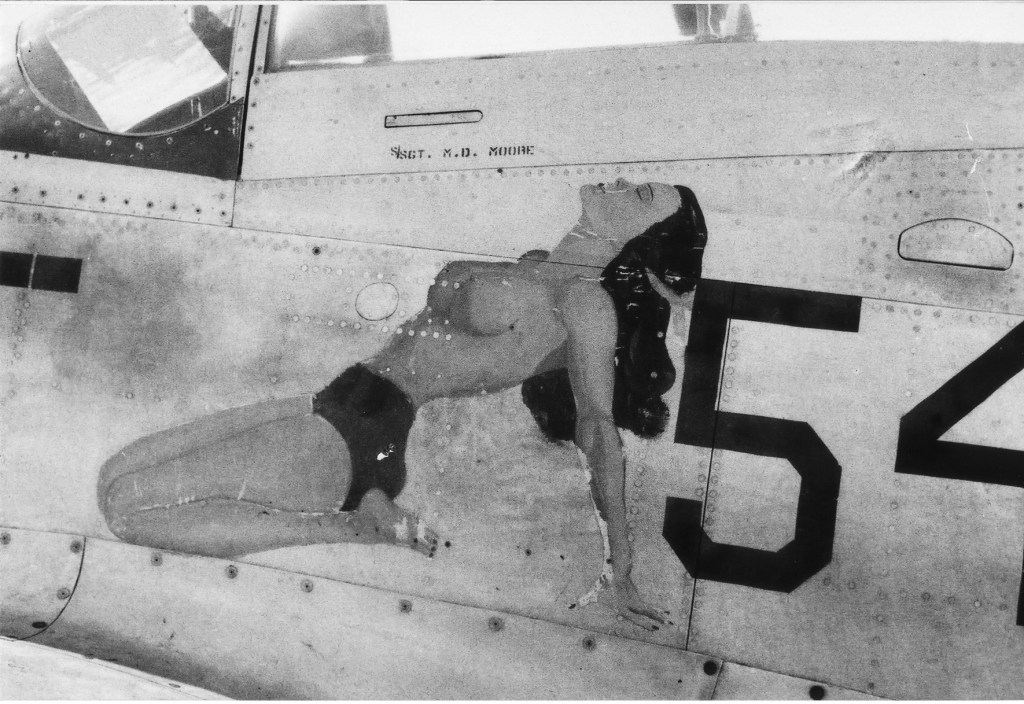
After Major Crim rotated home, “My Achin! [Ass]” was assigned to Flight Officer Theo Gruici, who had Major Crim’s kill and mission markings and the names of the ground crew removed, and had a reclining nude painted on the fuselage. Most decal manufacturers have a nude on the left landing gear cover for Major Crim’s markings, but I have yet to see a photo confirming this. The nude on the left landing gear cover is mostly obscured by the 110 gallon drop tank in the photo below, and it raises the question whether there was a nude also on the right landing gear cover. After inquiring of others who have more extensive photo collections than I do, there does not appear to be any photos of the right side of the plane. Some questions will never be answered.
Flight Officer Theo Gruici’s 300 “My Achin! [Ass]” (7th Fighter Command Association/Mark W. Stevens)
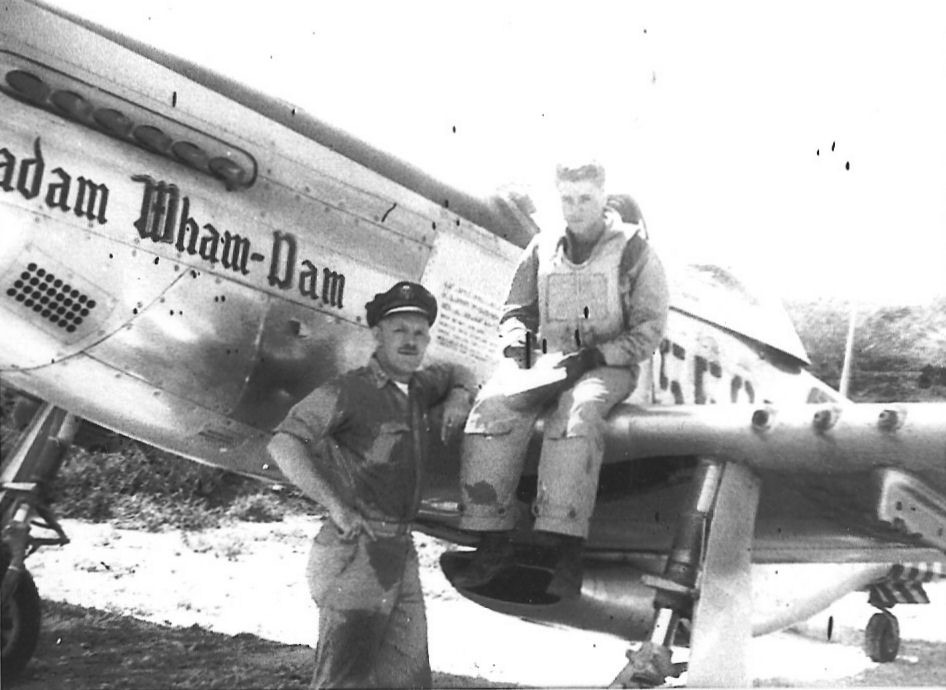
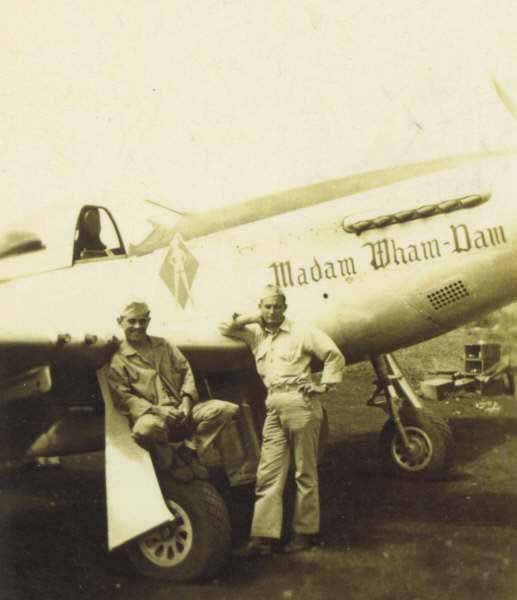
Major Harrison E. Shipman (458th FS/506th FG) – 550 “Madam Wham-Dam”, a P-51D-25NA, 44-72607, was assigned to Major Harrison E. Shipman, commander of the 458th FS. Major Shipman served as the 458th’s commander during the squadron’s time on Iwo Jima, and was not credited with any aerial victories.
Major Harrison E. Shipman in 550 “Madam Wham-Dam” (Harrison E. Shipman via 506th Fighter Group Association)
The actual color of the background for the nude nose art on the right side of the fuselage in front of the cockpit is unknown. AeroMaster provides you with three options; red, blue and yellow. My preference would be blue, but it could be red as well. It appears to be a little too dark for yellow.
Major Harrison E. Shipman sitting on the wing of 550 “Madam Wham-Dam” with Captain Pete Nowick(Harrison E. Shipman via 506th Fighter Group Association)
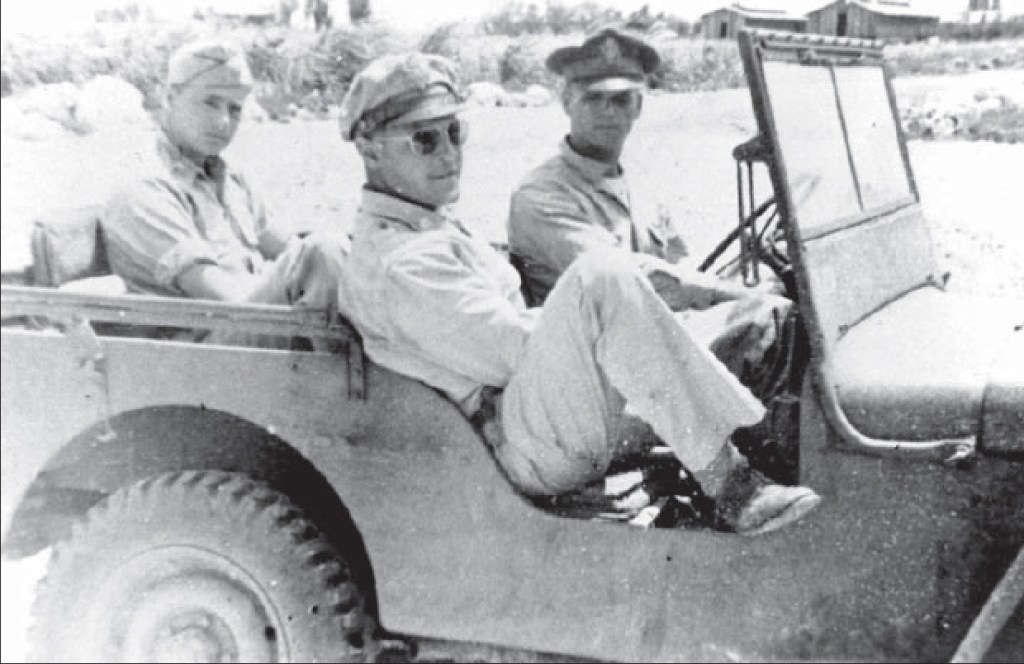
“Madam Wham-Dam’s” time on Iwo Jima was short lived. She arrived on either May 11th or the 13th and was lost on the disastrous June 1, 1945, Black Friday mission with 506th FG Deputy Commander Lt. Col. Harvey J. Scandrett at the controls.
Major Harrison E. Shipman and Lt. Col. Harvey J. Scandrett with “Madam Wham-Dam” (Harrison E. Shipman via 506th Fighter Group Association)
Please note the last two photos of “Madam Wham-Dam” and the color of the main landing gear legs. They are considerably darker than the main landing gear legs on either Major Tapp’s “Margaret – IV” or Major Crim’s “My Achin! [Ass]” which suggests that they have been painted. I have also seen what appears to painted landing gear legs in pictures of 21st Fighter Group Mustangs.
506th Fighter Group Squadron Commanders from left to right: Major Harrison E. Shipman (458th), Major Thomas D. DeJarnette (462nd), and Major Malcolm C. “Muddy” Waters (457th) (Harrison E. Shipman via James Shipman)600 “Tallahassee Lassie” (Curt Gwaltney via Carl Molesworth)
Major Thomas D. DeJarnette (462nd FS/506th FG) – 600 “Tallahassee Lassie”, a P-51D-20NA, 44-72547, was also flown by Lt. Col. Harley Brown, Deputy Commander of the 506th Fighter Group. DeJarnette and Brown were well acquainted with each other having flown Bell P-39 Airacobras in combat with in 80th Fighter Squadron, 8th Fighter Group in New Guinea earlier in the war. Major DeJarnette is in the back row of the photo above, second from the left. Lt. Col. Brown is to Major DeJarnette’s left.
Major DeJarnette was credited with shooting down a Kawasaki Ki-61 ‘Tony’ on the June 10, 1945 escort mission to the Tokyo area. Lt. Col. Brown was credited with damaging a Nakajima Ki-84 ‘Frank’ on the July 19, 1945 fighter strike mission against targets in the Nagoya and Osaka areas. Both men survived the war.
This decal sheet has been long out of production but you can still find it on eBay with the other sheets in the series. Although there are a few inaccuracies and omissions, it is still a quality decal sheet.
If you are wanting to purchase a more recently produced decal sheet for some of these planes, DK Decals has produced a 1/72 scale sheet containing markings for “My Achin! [Ass] and “Madam Wham-Dam”. My review of this sheet is found here:
Very Long Range P-51 Mustang Units of the Pacific War; Carl Molesworth; Osprey Publishing Limited (2006).
As a condition of the use of materials from the 7th Fighter Command Association website, the following disclaimer is included: Permission to use, copy and distribute documents delivered from this Worldwide Web server and related graphics is hereby granted, provided 1) That the use of the data will not be used for obtaining a profit of any kind, and 2) That the above disclaimer notice appear in all copies and that both that disclaimer notice and this permission notice appear. All other rights reserved. The name of “7th Fighter Command Association” may not be used in advertising or publicity pertaining to distribution of this information without specific, written prior permission. Mark Stevens and the 7th Fighter Command Association makes no representations about the suitability of this information for any purpose. It is provided “as is” without express or implied warranty. Mark Stevens and the 7th Fighter Command Association disclaim all warranties with regard to this information, including all implied warranties of merchantability and fitness. In no event shall Mark Stevens or the 7th Fighter Command Association be liable for any special, indirect or consequential damages or any damages whatsoever resulting from loss of use, data or profits, whether in an action of contract, negligence or other action, arising out of or in connection with the use or performance of this information.
AeroMaster produced several decals sheets featuring markings for Northrop’s P-61 Black Widow night fighter. One sheet, Black Widows Best Sellers Pt. 1 (48-628), provides markings for three 548th NFS Black Widows that were stationed on Iwo Jima.
AeroMaster Decals
As can be seen from the aircraft profiles, 548th NFS Black Widows are identified by their distinctive red spinners and cowl flaps. On this sheet, decals are provided for Midnite Madness, Cooper’s Snoopers, and The Spook/Anonymous III.
AeroMaster Decals
This decal sheet was released in 2003 and was printed by Cartograf. The artwork is really nice, and the sheet includes national insignias, squadron badges, uniform markings and stencils in addition to the plane specific nose art. The decals are in register which is what you would expect from Cartograf.
AeroMaster Decals
Midnite Madness was a P-61A-11 Black Widow (Serial No. 42-5610) flown by Captain James W. Bradford. The Radar Observer (R/O) was Lt. Lawrence K. Lunt and the Gunner-Observer was MSgt. Reno H. Sukow. Because it is difficult to determine the color of the lettering of the name from black and white photos, AeroMaster has given you three options: light blue, yellow and red. Midnite Madness was written off and salvaged after a landing accident with The Spook/Anonymous III on April 20, 1945.
Captain James W. Bradford in Midnite Madness on Iwo Jima (Jeff Kolln via Eric Shulenberger, PhD, JD)
Cooper’s Snooper was a P-61B-2 Black Widow (Serial No. 42-39454) flown by Captain George C. Cooper. The Radar Observer was 2nd Lt. Stanley S. Babst and the Gunner-Observer was SSgt. James O. Miller. Cooper’s Snooper would survive the war and end up in a boneyard at Clark Air Force Base in the Philippines.
Cooper’s Snooper on Iwo Jima (Dave Weisman via Eric Shulenberger, PhD, JD)
The Spook/Anonymous III was P-61B-1 Black Widow (Serial No. 42-39405) flown by Lt. Melvin W. Bode. His Radar Observer was Lt. Avery J. Miller and the Gunner-Observer was Lt. John C. Hope. The Spook/Anonymous III was lost of April 20, 1945, when it landed in dense fog and collided with Midnite Madness. Both Black Widows were written off.
The Spook/Anonymous III on Iwo Jima (Melvin Bode/Mickey Russell via Eric Shulenberger, PhD, JD)
This decal sheet is no longer in production and is hard to find. Every once in a while it shows up on eBay. These three aircraft are also on the following AeroMaster decal sheets:
Midnite Madness – Midnight Widows Part II (48-474)
AeroMaster Decals
The Spook/Anonymous III – Midnight Widows Part III (48-475)
AeroMaster Decals
Cooper’s Snooper – Midnight Widows Part IV (48-489)
AeroMaster Decals
Again, all of these decal sheets are no longer in production and are hard to find. In subsequent posts, I will review decal sheets that contain markings for 548th NFS Black Widows from other decal manufacturers (Kits World and Print Scale) that are in production and readily available to modelers in 1/72nd, 1/48th and 1/32nd scales.
Kits-World produces a decal sheet (KW172225) which includes the markings for Dinah Might. The other markings included on the decal sheet are for a 482nd BS/505th BG B-29 Bad Medicine.
Kits-World Decals
As you can see, the art work for both sets of markings is excellent and consistent with photos of each plane. In addition, the printing of the decal sheet is very well done and in register. A complete set of national insignia are provided for one plane.
Kits-World Decals
Kits-World has produced some excellent decals for B-29s in both 1/72nd and 1/48th scale. Check them out at: https://www.kitsworld.co.uk/index.php?JSTONE=1. You can purchase the decals directly from Kits-World or from many fine on-line retailers. Kudos to Kits-World!
UpRise Decals from St. Petersburg, Russia has released decal sheets featuring two 457th Fighter Squadron, 506th Fighter Group North American P-51D-25-NA Mustangs in 1/72nd, 1/48th, and 1/32nd scales.
UpRise produces decals for both World War II and modern military aircraft, civil aircraft and airliners, helicopters, ordinance, and insignia. Their website can be found here: https://uprise-decal.ru/
UpRise Decals
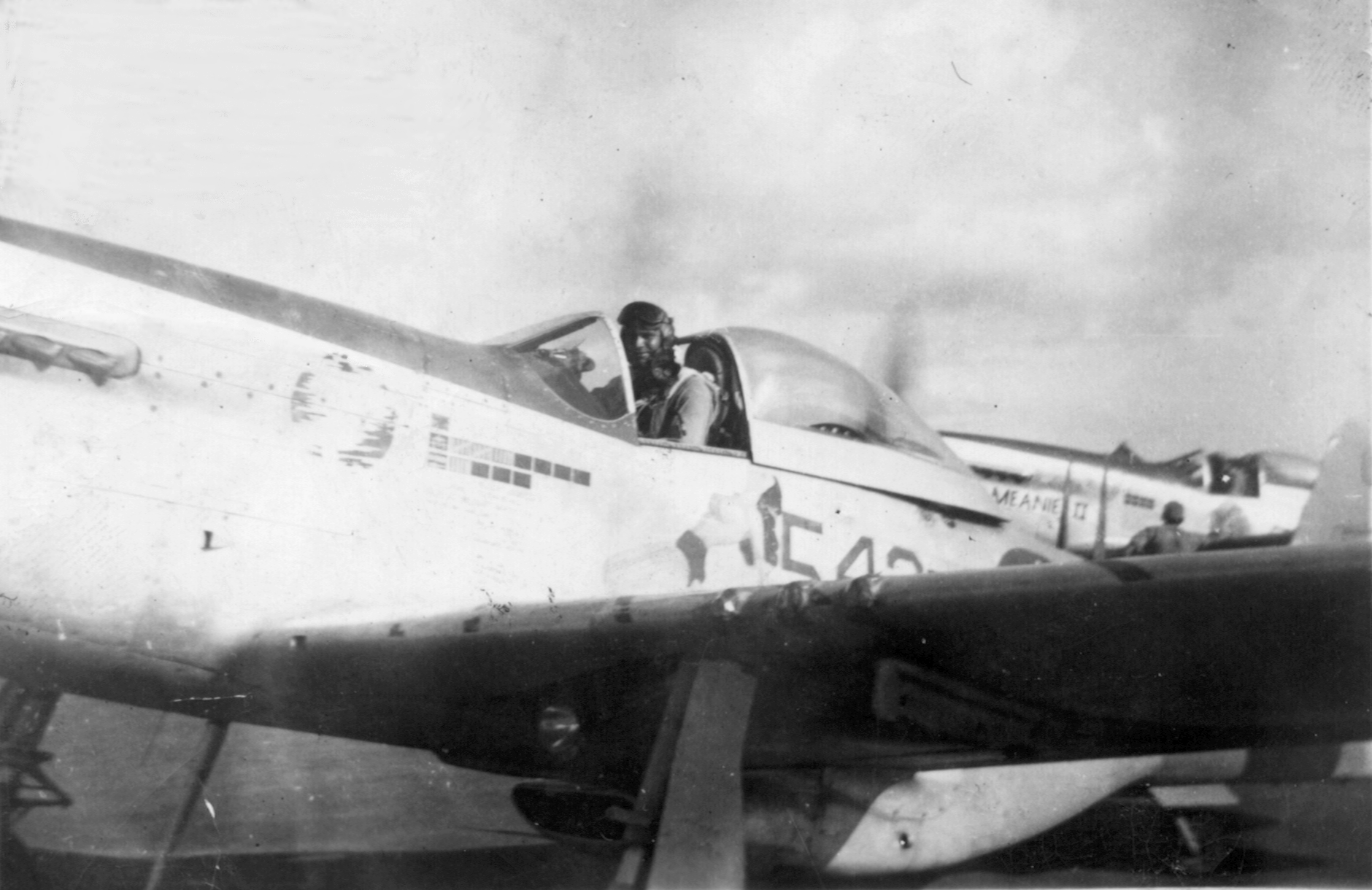
Decals are provided for 542 “Fighting Lady” (Serial No. 44-72570), and 528 “The Enchantress” (Serial No. 44-72671). Both of these planes are popular among modelers because of the pin up art which adorned their fuselages.
The decals are lazer printed and look exceptionally good, and each sheet comes with the dive angle stripes that appeared on the leading edge of the top of the wings and most of the exterior stencils that appeared on 506th FG P-51D Mustangs. The extensive exterior stencil decals are a nice nice touch on UpRise Decals’ part.
UpRise DecalsUpRise DecalsUpRise Decals
528 “The Enchantress” was assigned to 2nd Lt. William E. Saks. 2nd Lt. Saks went Missing in Action on the infamous June 1st “Black Friday” escort mission to Osaka in which 27 Mustangs and 24 pilots of the 15th, 21st and 506th Fighters Groups were lost to severe weather conditions encountered between Iwo Jima and the Japanese Home Islands. His Missing Air Crew Report indicates that he was flying a different P-51D-25 Mustang (Serial No. 44-72885) on that mission. The Enchantress survived the war and was transferred to Japan as part of the occupation forces after the cessation of hostilities.
528 “The Enchantress” (506th Fighter Group Association)
It is unknown if a second pilot was assigned initially to fly The Enchantress along with 2nd Lt. Saks, and if any other pilots were specifically assigned to the plane after 2nd Lt. Saks was lost on June 1st. We are unable to locate an individual picture of 2nd Lt. Saks, or a group picture that includes him. The picture below is of Dr. Theodore Paprocki, the 457th squadron’s medical officer, sitting on the wing of The Enchantress. Note the wear of the paint on the back sides of the propeller blades (uncuffed portions) due to the sand and volcanic ash on Iwo Jima.
Dr. Theodore Paprocki sitting on the wing of “The Enchantress (506th Fighter Group Association via Maurita Paprocki)
The other decals are for 542 “Fighting Lady” which was assigned to 1st Lt. Ralph Gardner and 1st Lt. Chester Jatzcak. Below is a nice close up picture of the pin up art that adorned the fuselage.
542 “Fighting Lady (506th Fighter Group Association)
While the quality of the below photo is not the best, it does clearly show the position of the name “Fighting Lady” on the nose below the engine exhaust stacks and the elegant design of the Mustang’s nose.
Unknown ground crew member lying on the wing of “Fighting Lady” (506th Fighter Group Association)
Norma Jatczak, 1st Lt. Chester Jatczak’s wife, was of the belief that the plane’s name was “Broadway Gal”. Unfortunately, the 506th Fighter Group Association does not have a photo to substantiate her belief.
1st Lt. Chester Jatczak crouched on the wing of “Fighting Lady” (506th Fighter Group Association via Norma Jatczak)
Please note the photo below does not have the name “Fighting Lady” on the nose yet. This photo was likely taken in June of 1945 as the plane has a solid green tail instead of the initial squadron markings of diagonal green stripes on the tail.
1st Lt. Ralph Gardner in the cockpit of “Fighting Lady” (506th Fighter Group Association)
I interviewed Ralph Gardner at the 2013 506th Fighter Group Reunion in Chino, California, but did not think to inquire about the whether the plane had the name of “Broadway Gal” at one point in time, or whether the name was on the right side of the nose. The photo below appears to dispel the notion that “Broadway Gal” appeared on the right side of the nose.
1st Lt. Ralph Gardner flying “Fighting Lady (506th Fighter Group Association)457th Fighter Pilots in front of “Fighting Lady” – Front row left to right; Lts. Alan Kinvig and George Hetland; Back row left to right; Lts. Ray Miller, Martin Ganschow, Ralph Gardner and Larry Grennan (506th Fighter Group Association via Ralph Gardner)
UpRise Decals uses Film Free Ability (FFA) for their decals. This is the technology that allows the modeler to remove the clear film that covers the decal during production. The initial application of FFA decals is the same as regular water slide decals. After applying the decals, whisking away the excess water, and working out any air bubbles from under the decals, you let the decals sit for 24 hours, and then gently remove the film that covers the decals. Without any film surrounding the decals, they look like they are painted on. Really nice!
A tutorial/description of UpRise Decals’ Film Free Ability decals is found here: https://uprise-decal.ru/ffa. There are also several YouTube videos providing tutorials on how to use these and similar decals from other manufacturers.
UpRise Decals can be purchased on eBay from two vendors who appear the be the same person. When I initially purchased these decals, the FFA was only available on their 1/32nd decal sheets, but now all their decals (1/144th, 1/72nd, 1/48th, 1/32nd and 1/24th) produced from November 2022 forward use the FFA technology. If you want to use UpRise’s FFA decals, you need to check to make sure that the particular decal sheet you are buying has the FFA technology. There are probably some the regular water slide decals still being sold or resold on eBay.














 Iwo Jima Models