Iwo Jima Art: 7th Fighter Command “Sun Setters” Trench Art

“Trench art” is a term used to describe objects made from battle field debris and by-products of modern warfare. The term “trench art” was coined during World War I, although similar items have been produced in other conflicts too, and World War II was no exception.

The material used in trench art usually depended on what was available, and the ingenuity of those individuals making the trench art. The most common materials used for trench art are shell casings and bullets, although other battlefield debris was used as well. While a lot of trench art is decorative, some trench art has utility, such as shell casings made into to candle stick holders, ash trays, vases, tea pots, pitchers, cups or beer steins.

While trench art suggests that it was made by front line soldiers to pass the time between battles, it would appear that most of it was made behind the lines by servicemen who had access tools and were experienced in the craft of metal working. Prisoners of war also manufactured trench art from available materials as way of passing the time.

Trench art was also made by local civilians for sale to soldiers (i.e. cigarette lighters, matchbook covers, etc . . .), and other individuals. This cottage industry arose during war, continued after the war, with trench art-type objects being created for sale as souvenirs to the visitors to battlefields and cemeteries. This cottage industry continues to this day.

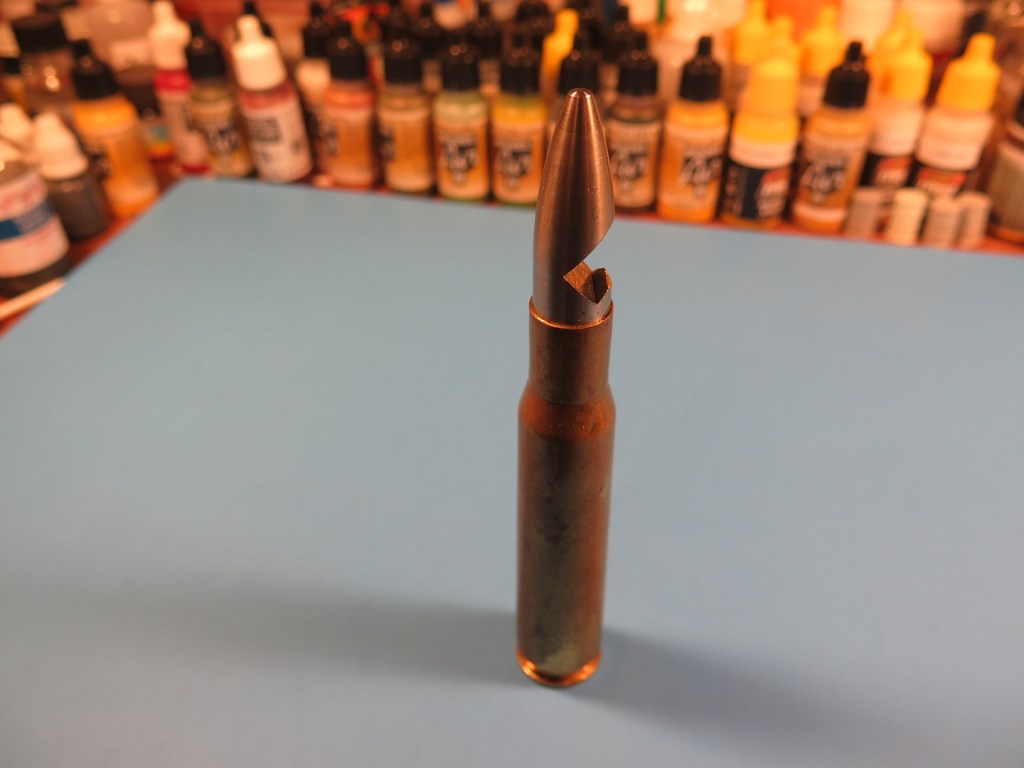
A good friend of mine was attending an air show, and saw the above 50 caliber bullet being sold as a souvenir, and picked one up for me. It is a spent shell casing with a milled bullet that serves as a bottle opener. Great conversation piece when having friends over for a beer. Trench art? Absolutely. Trench art does not need to decorative.

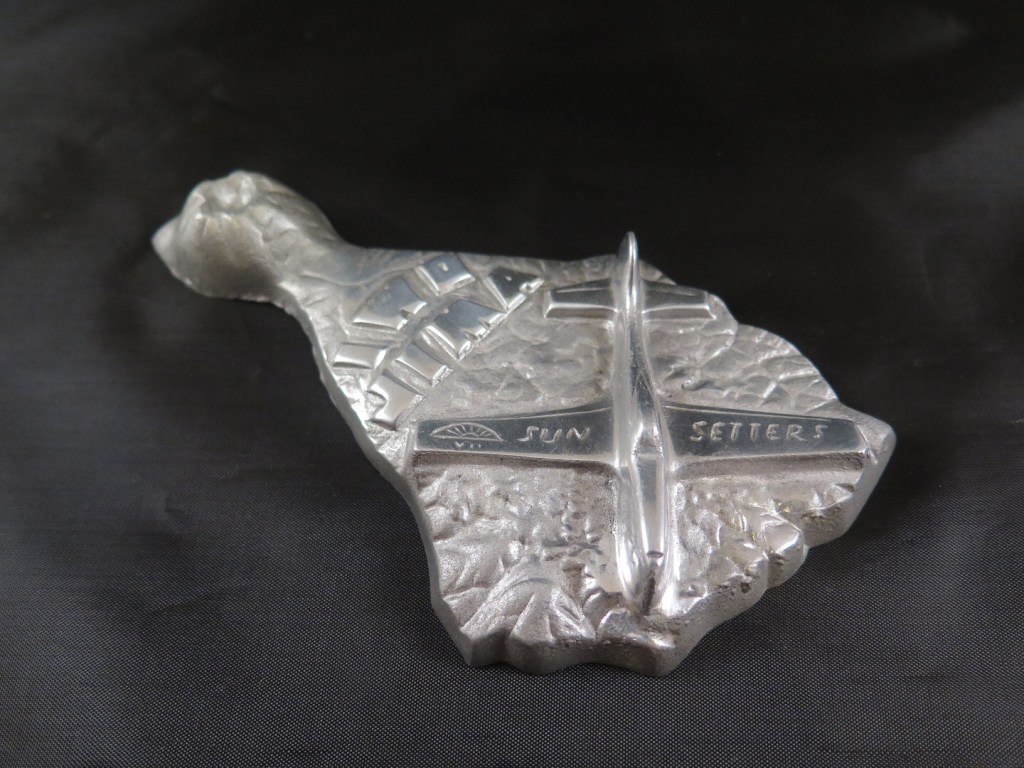
7th Fighter Command officers, pilots, ground crews, and support staff had their own special trench art as shown below. It is a casting of Iwo Jima with Mt. Suribachi, the words “Iwo Jima” and a P-51D Mustang. Inscribed across the wings of the P-51D are the words “Sun Setters” and the 7th Fighter Command insignia.

Initially, these castings were made from aluminum from wrecked Japanese planes on Iwo Jima. The aircraft aluminum was melted down and poured into a mold. After that supply was exhausted, aircraft aluminum from wrecked American aircraft was used. It is not known how many of these castings were made, but it is safe to assume that if you were stationed on Iwo Jima, and wanted one, you were provided with one.

The 7th Fighter Command named themselves the “Sun Setters” because they saw their VLR missions as an integral part of bringing an end to World War II.

7th Fighter Command Insignia

These castings appear periodically on eBay and normally sell for some where between $100.00 to $200.00, although bidding can sometimes exceed $200.00. They are a nice piece of trench art, and a unique piece of World War II history for the historian, collector, or aviation enthusiast.

Book Review: “Fighters Over Japan, Part 2” by Tomasz Szlagor and Leszek A. Wieliczko

Like Part I, Part II of Kagero’s “Fighters over Japan” is a softbound book with 34 pages. However, instead of covering Japanese Army Air Force and United States Army Air Force fighters as Part I did, Part II focuses mostly on Japanese Navy and United States Navy fighters. In addition, there are only 15 aircraft profiles, but each profile shows both sides of the aircraft, a top view, and at least the undersides of the wings.

There are four aircraft profiles of USAAF fighters in Part II, but the only Iwo Jima VLR Mustang included is 300 “My Achin!” Ass, flown by the CO of the 531st FS, Major Harry C. Crim.

Again, like Part I, what this book lacks in meaningful text describing the air war over Japan in the last few months of the Pacific War, is made up in the fantastic color aircraft profiles by Polish artist Janusz Swaitlon.

Janusz Swaitlon
Janusz Swaitlon

The 15 color profiles in the book cover the following aircraft:

Mitsubishi A6M5c Model 52 Hei Zero, No. 03-09, Serial Number 32374, flown by Joto Hiko Heiso Takeo Tanimizu of 203rd Sento Hitokai.

Mitsubishi A6M5a Model 52 Ko Zero, No. YoD-126, Serial Number unknown, flown by Shoi Sadaaki Akamatsu of the 1st Hikotai, 302nd Kokutai (decals included).

Mitsubishi J2M3 Raiden Model 21, No. YoD-152, Serial Number unknown, flown by Taii Susumu Ito of the 1st Hikotai, 302nd Kokutai (decals included).

Mitsubishi J2M3 Raiden Model 21, No. 352-20, Serial Number unknown, flown by Chui Yoshihiro Aoki of the 1st Hikotai, 352nd Kokutai.

Mitsubishi J2M3 Raiden Model 21, No. YoD-1183, Serial Number unknown, flown by Chui Ei Fukuda of the 1st Hikotai, 302nd Kokutai (decals included).

Kawanishi N1K2-Ja Shiden Kai Model 21 Ko, 343-B-30, Serial Number unknown, flown by Taii Yoshishige Hayashi, 407th Hikotai, 343rd Kokutai (decals included).

Kawanishi N1K2-J Shiden Kai Model 21, No. 343-A-15, Serial Number unknown, flown by Taii Naoshi Kanno, 301st Hikotai, 343rd Kokutai.

Kawanishi N1K2-J Shiden Kai Model 21, No. 343-B-03, Serial Number unknown, flown by Hiko Heisocho Hiroshi Ohara, 407th Hikotai, 343rd Kokutai (decals included)

Chance Vought F4U-1D Corsair, No. 167, BuNo. 57803, flown by Lt. Cmdr. Roger Hedrick, VF-84, USS Bunker Hill (CV-17) (decals included).

Grumman F6F-5 Hellcat, No. 9, BuNo unknown, flown by Lt. Hamilton McWhorter, III, VF-12, USS Randolph (CV-15) (decals included).

Chance Vought Corsair IV, 115-X, KD 658, flown by Lt. Robert H. Gray DSC, No. 1841 Naval Air Squadron, Fleet Air Arm, HMS Formidable (decals included).

Republic P-47D-28-RA Thunderbolt, 42 “Passionate Patsy”, Serial No. 42-29091, flown by Lt. Ralph Barns, 310th FS, 58th FG, 5th AF.

North American P-51D-25-NA Mustang, 300 “My Achin!” Ass, Serial No. 44-73623, flown Major Harry C. Crim, CO of the 531st FS, 21st FG, 7th AF.

North American P-51D-20-NA Mustang, 10 “Little Girl”, Serial No. 44-64124, flown by Captain Leroy Grosshuesch, 39th FS, 35th FG, 5th AF (decals included).

Republic P-47N-1-RE Thunderbolt, 08 “Cheek Baby”, Serial No. 44-87996, flown by Lt. Durwood B. Williams, 333rd FS, 318th FG, 5th AF (decals included).

A very nice decal sheet is included which provides decals in 1/32nd, 1/48th, and 1/72nd scales. While decals for Major Crim’s 300 “My Achin!” Ass are not included, the decals include several JNAF fighters that participated in the defense of the Japanese Home Islands. One of those is the decals for Chui Ei Fukuda’s Mitsubishi J2M3 Raiden, who is believed to have been shot down by Major James B. Tapp, CO of the 78th FS, on April 19, 1945.

Major Harry C. Crim – Major Crim was the 3rd highest scoring VLR ace with six confirmed victories, and the only fighter ace of the 21st FG. He joined the 21st FG in August, 1944, after serving with the 14th Fighter Group in Tunisia flying the Lockheed P-38 Lightning. Unable to score any aerials victories with 14th FG, he scored his first two victories, a Kawasaki Ki-61 “Tony” and a Kawasaki Ki-45 “Nick” on April 7, 1945, the first VLR mission flown by the 7th Fighter Command Mustangs. His last victory, a Mitsubishi A6M Zero, came on July 6, 1945 during a strike mission against Atsugi airfield.

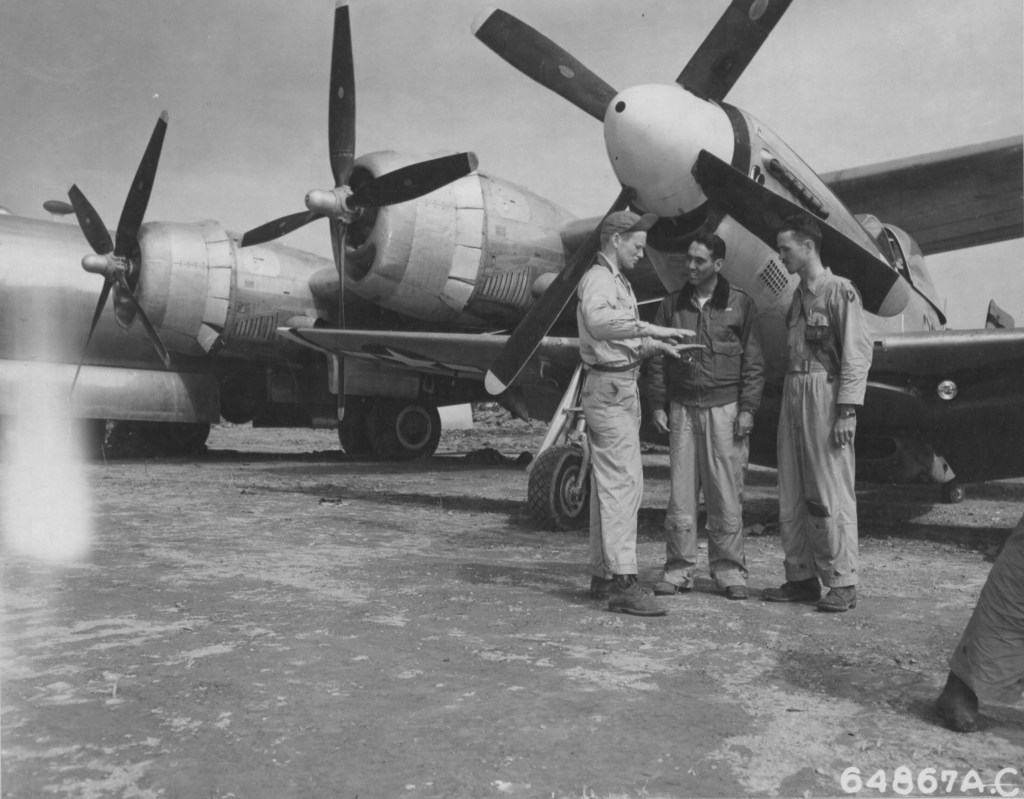
In an obvious publicity photo, then Captain Crim (left) discusses fighter tactics with Brig. General Ernest M. “Mickey” Moore, while Major DeWitt Spain listens in front of a 531st FS Mustang parked under the wing of a B-29.

USAAF/National Archives via Fold3
Mark W. Stevens/7th Fighter Command Association

Janusz Swaitlon – Janusz Swaitlon is a professional military history book illustrator specializing in aircraft profiles. You can purchase aircraft profiles from Mr. Swaitlon. I have purchased two aircraft profiles from him in the past; Major James B. Tapp’s 101 “Margaret IV” (78th FS, 15th FG), and 1st Lt. William Sak’s 528 “Enchantress” (457th FS, 506th FG). He emailed me the digital files of the aircraft profiles, and I took them to a commercial printer and had them professionally printed. His aircraft profiles are top-notch. Check out his website at Janusz.swaitlon.eu. He can be contacted by email at contact@janusz-swaitlon.eu.

Like Part I, this book is no longer in print, but you can still find it on Amazon at inflated prices.

Decal Review – DK decals Pacific Fighters Part One (48017)

If you are following this blog or check in occasionally, it is my hope and prayer that you remain healthy and safe during the COVID-19 pandemic. We are now living under very different circumstances that most of us could not have imagined, and we are all wondering whether our lives will return to what we once knew as normal. If you are under a stay-at-home order to prevent or slow the virus, I hope that my blog fills some of that time.

My good friend, and one of the 506th Fighter Group historians, Brian Walter, recently brought to my attention the Czech decal manufacturer, DK decals. Even though it appears that DK decals has been in business since 2014, they have escaped my notice because their decals are not widely distributed in the United States.

DK decals produces decals for World War II aircraft in 1/144, 172, 1/48 and 1/32 scales, and to this point, it appears that some of their focus has been on aircraft used in the Pacific and China/India/Burma theaters. Any company that produces decals of aircraft used in either of those theaters of operation is very welcome. Their Pacific Fighters Part One (48017) includes decals for Major Harry C. Crim’s 300 “My Achin!” Ass (21st FG, 531st FS), so I purchased that decal sheet to review. More on Major Crim in an upcoming post.

As can be seen below, their aircraft profiles on their decal placement and painting guide are very nicely done, their decals are in register, and they look excellent.

The decals for Major Crim’s Mustang are very accurate when compared to the photo below. From what I have seen of their decal sheets, they are very well researched. Kudos to DK decals.

Mark W. Stevens/7th Fighter Command Association

I real test is how the decals actually perform. I took a scrap piece of plastic sheet, scribed two vertical lines on it, sprayed on a primer coat of Alclad II Grey Primer & Microfiller (ALC 302), and then sprayed on Alclad II Aluminum (ALC 101). The result was smooth surface upon which a decal could be tested without having to put down a gloss coat.

I no longer use a decal setting solution or a decal solvent when applying decals. I have just had inconsistent results using decal solvents. Instead, I wet the area with water where the decal is to be placed, place the decal and move it to its proper position, and then roll out the water underneath the decal with a cotton swab. With a brush, I apply a thin coat of Future acrylic floor polish over the decal and let it dry. Because Future is self-leveling, when it dries, it pulls the decal down over minor raised details and into recessed panel lines. This method has been basically fool proof for me.

As you can see above, the decal performed wonderfully using this method. The decal snuggled down into the scribed panel lines and the decal film basically disappears. I would highly recommend DK decals. Great products.

DK decals products are widely distributed in Europe, but it is difficult to find a hobby store in the United States that carries their products. I purchased this decal sheet with two others from Hannants in Great Britain. I did find an on-line model web store in the Chicago area, but their prices were so high, I could not justify buying from them. I have also been finding them on eBay occasionally.

The good news is that DK decals has recently released a 1/48 decal sheet for P-51D/K Mustangs over the Pacific & Australia (48028) that contains decals for five Iwo Jima VLR Mustangs. I have this decal sheet on order and will review it once received. In addition, they have announced the release of a 1/72 decal sheet dedicated solely to Iwo Jima VLR Mustangs (P-51D Mustang – Very Long Range P-51 Units Iwo Jima 1945; 72087). Again, kudos to DK decals!

Paint Comparison: Hataka Hobby Orange Line and MRP Mr. Paint Lacquers

I have been looking for a hobby paint that is a close match for the green used on the tails of 457th FS Mustangs. From my research, it appears that the 457th used Willow Green (FS14187/ANA 503), or something very close to Willow Green. Willow Green was originally used by the U.S. Navy in some of their colorful pre-war paint schemes. I was pleased to find out that both Hataka Hobby and MRP Mr. Paint manufacture a Willow Green lacquer based paint.

Eduard

I enjoy using lacquers because of their quick drying times and durability. When laid down with an airbrush, they “bite” into the plastic, and therefore, tend to adhere well. The downside to lacquers is that their composition uses chemicals that are dangerous to humans. Prolonged exposure to these chemicals can cause serious health problems, so painting in a well ventilated area is recommended. Those who take the label warnings seriously usually attempt to mitigate these effects by using a paint booth with an exhaust fan that vents the paint fumes to the outside, or a ventilation mask. In addition to the chemicals and the associated strong smell, airbrush clean-up is a little more difficult and time consuming as compared to water based acrylics, and the range of paints in the past have been limited as far as colors.

Both Hataka Hobby and MRP have been around for several years, but their paints have not been readily available in the United States until the last few years. Fortunately now, several U.S. on-line retailers carry both brands, and their wide range of colors are welcomed by modelers who enjoy using lacquer based paints. This is the first time I have had the opportunity to use either paint.

Hataka Hobby Orange Line – Based in Poland, Hataka Hobby produces both water based acrylic paints (Blue Line optimized for brushing, and Red Line optimized for airbrushing) and lacquer paints (Orange Line). Their Orange Line of lacquer paints has a total of 282 colors for both aircraft and military vehicles, and you can purchase them individually or in convenient sets of 4 to 8 colors. Hataka Hobby also provides a proprietary lacquer thinner to thin their paints.

Their paints come in 17 ml plastic bottles with dropper tips and include a stainless steel ball bearing to aid mixing the pigments into suspension. These are similar to the type of bottles used by AK Interactive, Ammo of Mig Jimenez, and Vallejo use for their water based acrylic paints, and the dropper tips make dispensing paint from the bottle incredibly easy. Kudos to Hataka Hobby for using these bottles for their lacquer paints. These paints are not airbrush ready out the bottle, and Hataka Hobby recommends thinning with a 40/60 to 60/40 thinner to paint ratio. Hataka Hobby also recommends spraying them between 10 and 20 psi.

Using my Badger 100GF dual action airbrush, I thinned the paint to a 50/50 paint to thinner ratio, and sprayed it at 15 psi. The paint laid down beautifully, covered well, and dried quickly to a nice matte to semi-matte sheen. There is not a overly strong odor to these paints, and clean-up was not difficult.

Hataka Hobby Orange Line Willow Green (HTK-C221)

MRP Mr. Paint – MRP Mr. Paint is based in Slovakia, and first introduced their line of acrylic lacquer paints (86 colors at last count) for both aircraft and military vehicles. It has now released two lines of water based acrylic paints; one for figure painting and one for airbrushing.

Their acrylic lacquer paints come in either 30ml glass bottles or 30ml plastic bottles with a flip top dropper cap. It appears that MRP is going away from the glass bottles to the plastic bottles (more on the plastic bottles below). They are airbrush ready out of the bottle; no thinning necessary. Because they are pre-thinned, no agitator is necessary as they mix quickly with very little effort. I really like the convenience of not having to thin the paint. Kudos to MRP.

The on-line reviews I have read and listened to, modelers have raved about how good these paints are and their ease of application. I would have to concur wholeheartedly. I sprayed it at 15 psi, and the paint laid down beautifully, covered well, and dried quickly to a nice satin sheen. Again, there is not an overly strong odor to these paints, and clean-up was not difficult.

MRP Mr. Paint Willow Green (MRP-385)

My only complaint about MRP’s acrylic lacquers is not about the paint itself, but about the 30 ml plastic bottles with the flip top dropper cap. Do not hold the bottle at an angle when attempting to transfer paint from the plastic bottle to a paint cup as it will just run onto the cap and not into the airbrush’s paint cup. The best way to transfer paint from the plastic bottle to an airbrush paint cup is to turn the plastic bottle completely upside down and apply pressure to the sides of the bottle. The plastic bottle is fairly stiff, so it really does not lend itself to squeezing. I found it awkward, and like the bottle used by Hataka Hobby much better.

MRP Mr. Paint’s Willow Green is almost an exact match to the color chip for ANA 503 found in The Official Monogram U.S. Navy and Marine Corps Aircraft Color Guide, Volume 2: 1940-1949. Hataka Hobby’s Willow Green is slightly lighter, and looks as if it has been lightened to take into account the scale effect of color. I am not sure if that is intentional on Hataka Hobby’s part as I could not find anything on their website to suggest that they formulated their paint colors in this way. Either paint will work nicely for a 457th FS Iwo Jima VLR Mustang.

I would highly recommend either paint to modelers. The colors appear to be accurate, and both lay down beautifully, cover well, dry quickly, and are very durable. Kudos to both companies.

Kit News: Eduard’s Next Release of Its 1/48 North American P-51D Mustang

Eduard has not disappointed with respect to the number of different boxings of its new 1/48 North American P-51D Mustang that have been released so far, nor has it been shy about announcing future boxings of the kit.

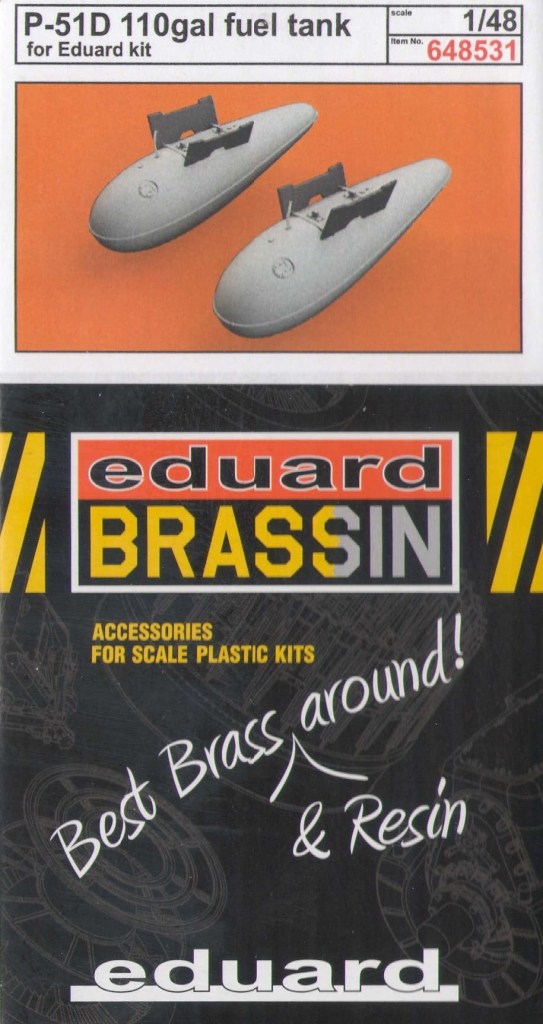
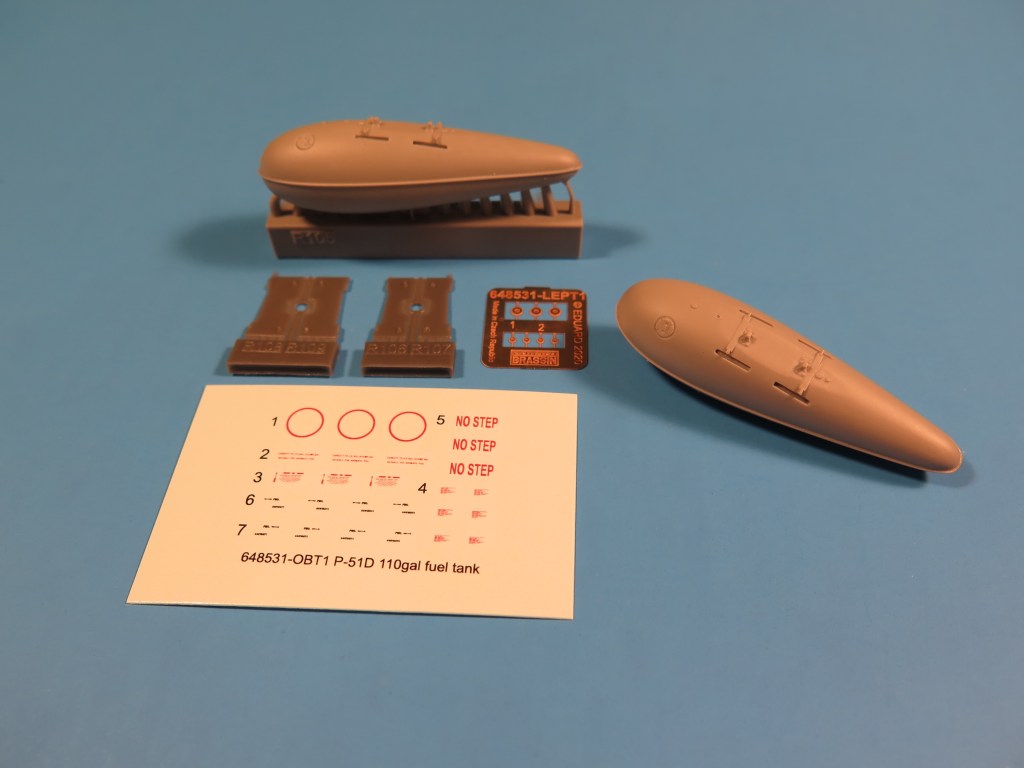
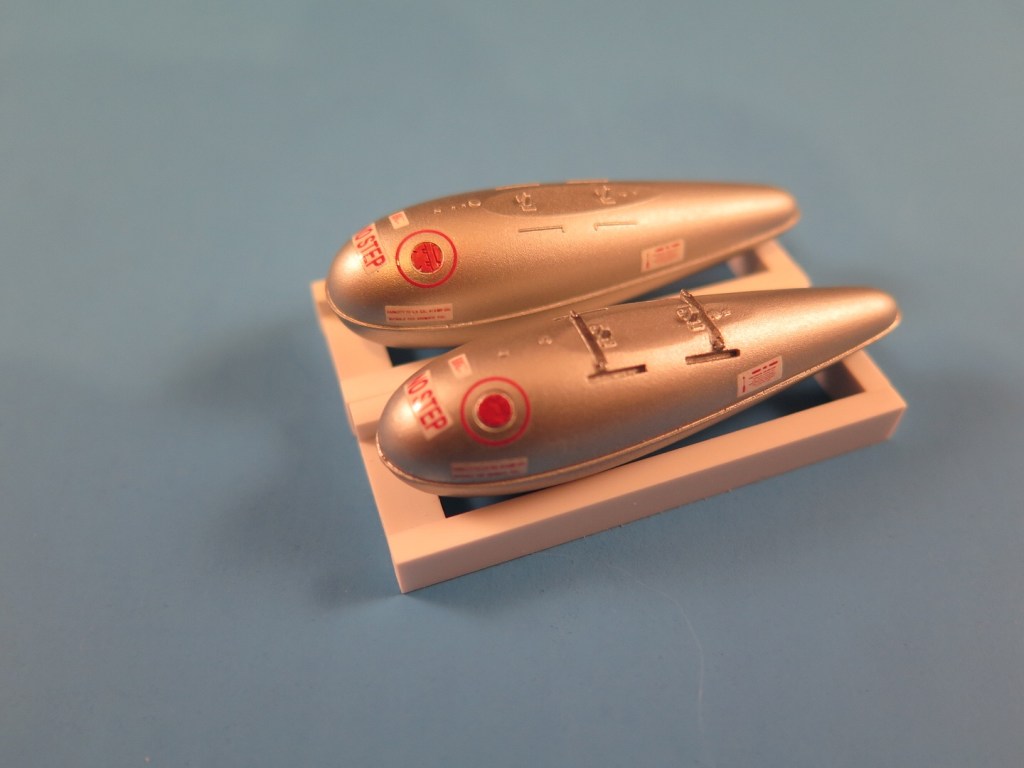
So far Eduard has released a Limited Edition “Chattanooga Choo Choo” P-51D-5 (with the swayback fillet) boxing; a P-51D-5 ProfiPACK boxing, an Eday 2019 Special Edition P-51D “Excalibur” boxing, and a Royal Class boxing with two decal options for an Iwo Jima VLR Mustang. In addition, Eduard has released numerous Brassin upgrade sets so a modeler can really take detailing their kit to the next level. Quite impressive.

Eduard has announced another ProfiPACK boxing to be released next month, and the August 2020 release of their Pacific Theater boxing with further decal options to build an Iwo Jima VLR Mustang.

In this month’s edition of INFO Eduard, they gave us a sneak peak of the March ProfiPACK boxing decal options, and again, there is no disappointment. In addition to decals for the planes flown by five very recognizable European Theater aces, it will also include decals for Major James B. Tapp’s 101 “Margaret IV” (78th FS/15th FG). Major Tapp was the commander of the 78th Fighter Squadron, and the second highest scoring VLR Mustang ace with eight aerial victories.

Eduard

Kudos to Eduard for including decals for Major Tapp’s 101 “Margaret IV” in the upcoming ProfiPACK boxing. Nice to see Pacific Theater Mustangs getting some more love.