Memorial Day 2024; Honor Those Who Have Served to Protect Our Liberty and Freedoms

“Freedom is never more than one generation from extinction. We didn’t pass it to our children in the bloodstream. It must be fought for, protected, and handed on for them to do the same.” Ronald W. Reagan, 40th President of the United States of America

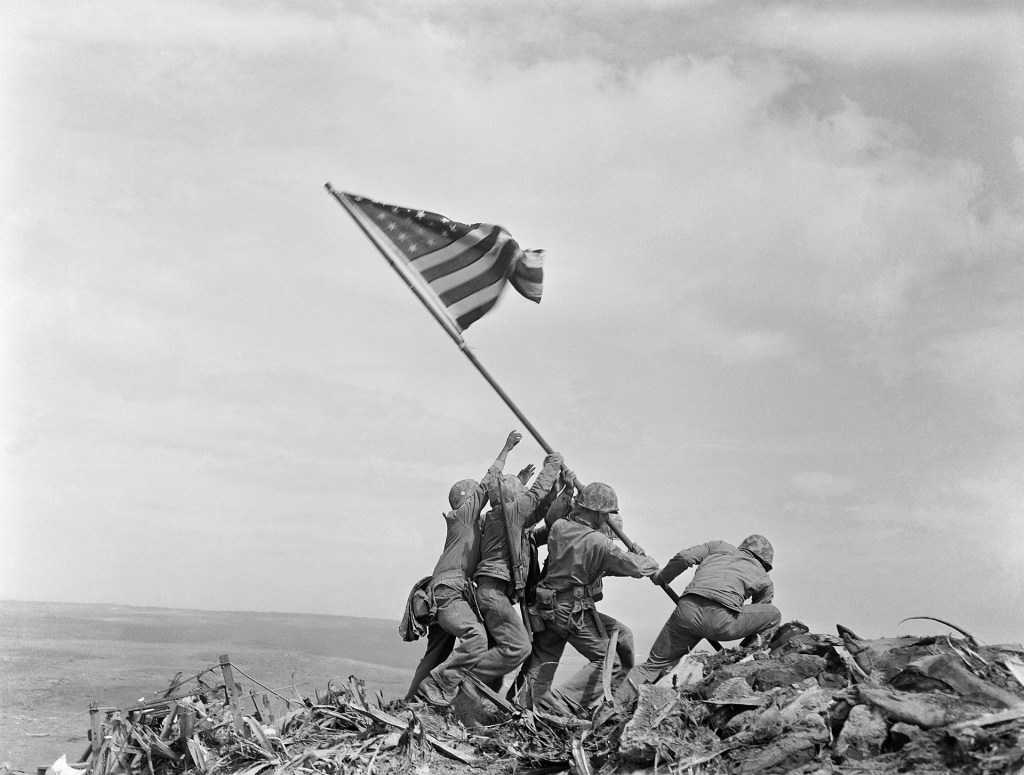
Joe Rosenthal/Associated Press via Fold3

This Memorial Day we have a chance to pause and honor the brave men and women who made the ultimate sacrifice for our country. We owe them such a tremendous debt, for the freedoms we enjoy today were paid for with an extremely high price! Their sacrifices ensured our liberty largely continues today – from the ability to gather with loved ones, to worship together, to speak as we see fit (and the companion right not to be forced to speak that which we know to be false), and to assemble and peacefully protest to effectuate change.

The statue below is outside of the National Archives building in Washington D.C. It is of an ever watchful soldier holding his helmet, sword, and shield. The inscription below the statue reads “ETERNAL VIGILANCE IS THE PRICE OF LIBERTY”.

Guardianship Statute by James Fraser (Photo by Jeff Reed, National Archives)

Let us not be asleep at the wheel. We have forces from within that are intolerant, and this intolerance is being cultivated in our schools, colleges and universities. Speech which a few years ago was considered normal speech, is now being touted as hate speech. And we are now being told that we need to address certain individuals in ways that has no basis in reality.

Six thousand eight hundred twenty-one United States servicemen lost their lives on Iwo Jima. If we do not protect our liberty and freedoms, the sacrifices made by them, and so many more, will have been in vain.

Photo(s) of the Week; The 7th Air Force Bombing Campaign I

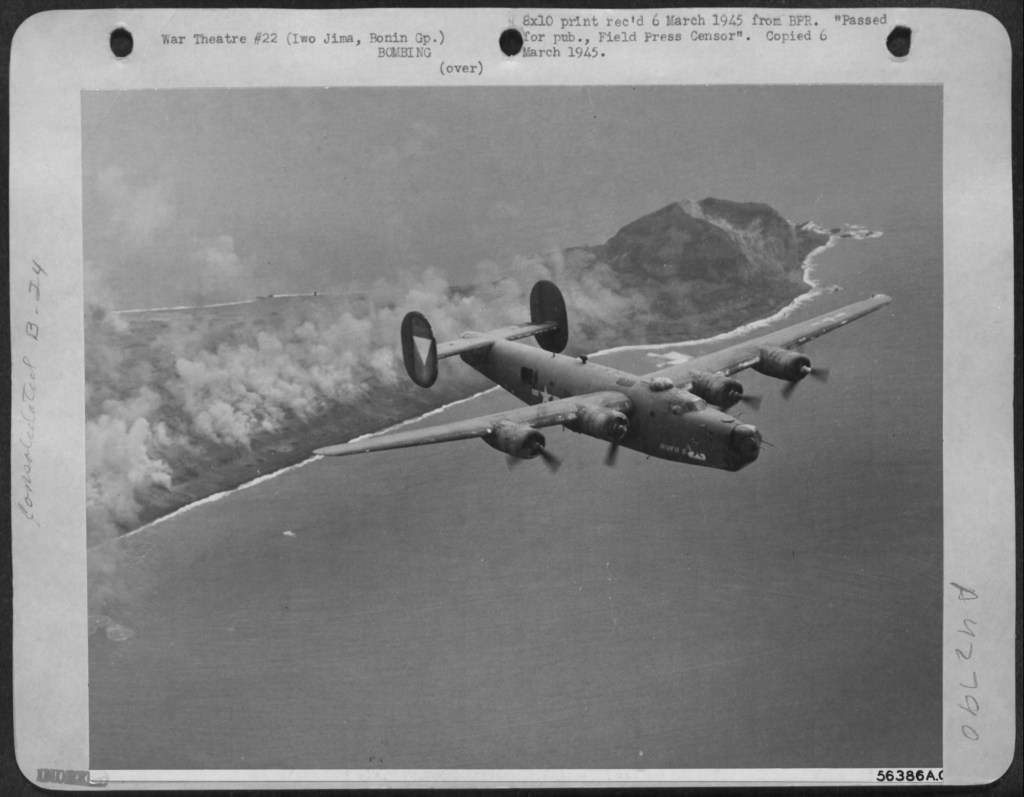
Starting on August 10, 1944, the 7th Air Force B-24 Liberators bombed the airfields and troops on Iwo Jima continuously up to the invasion. The goal was not necessarily to bomb the Japanese forces on Iwo Jima into submission, but to disrupt and neutralize the Japanese ability to strike American airfields in the Marianas from Iwo Jima.

USAAF/National Archives via Fold3

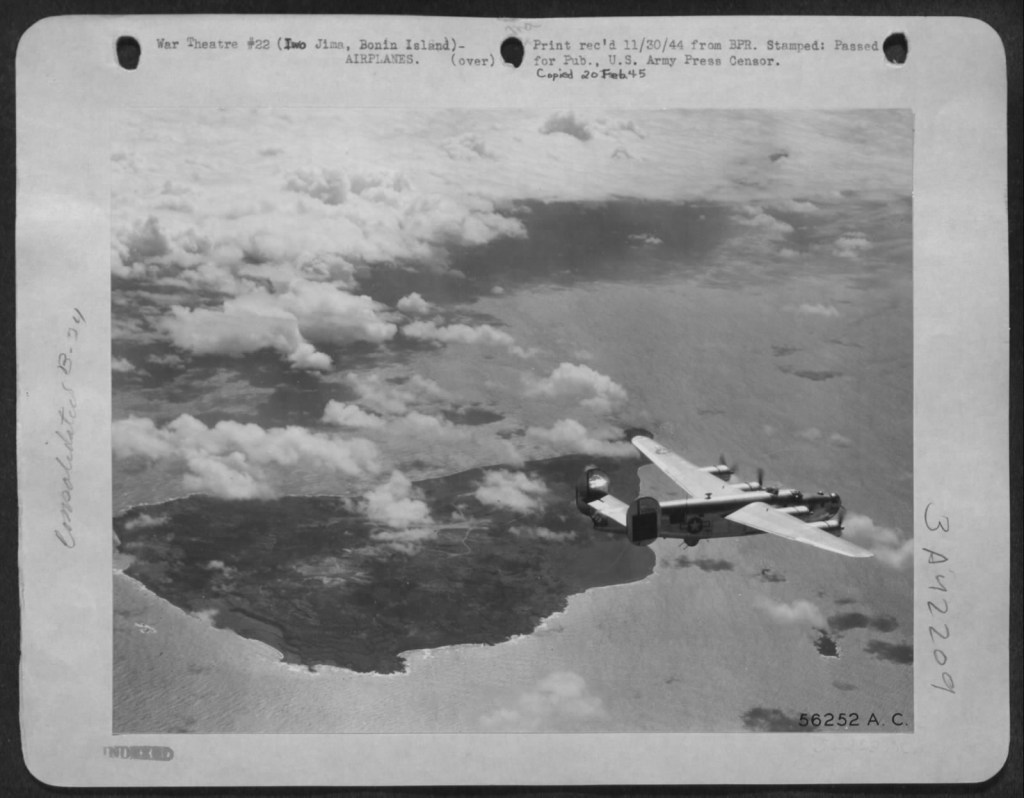
Above is a nice photo of a 392nd Bomb Squadron, 30th Bomb Group Consolidated B-24J Liberator after its bomb run with Mount Suribachi in the background. Note the Japanese use of smoke pots in an attempt to obscure the location of the airfields from the bombers. The photo below shows a 42nd Bomb Squadron, 11th Bomb Group B-24J Liberator on its way back to the Marianas after bombing Iwo Jima.

USAAF/National Archives via Fold3

While the 7th Air Force B-24 crews were very accurate in placing their bombs within the target areas, it did not take very long for the Japanese forces to repair the bomb cratered runaways to get the airfields back in service.

Reference:

Strike and Return: American Air Power and the Fight for Iwo Jima, Cory Graff, Specialty Press (2006)

Photo(s) of the Week; Pre-Invasion Iwo Jima

USAAF/National Archives via Fold3

Above is a nice photo of Iwo Jima taken from the waist window of a 7th Air Force Consolidated B-24J Liberator at the beginning of a bombing raid. I like this photo because it shows the location of Motoyama Airfield #1 (South Field) and Motoyama Airfield #2 (Central Field) on Iwo Jima.

7th Air Force B-24s started bombing Iwo Jima as soon as Saipan was secure and Isley Field was completed. On August 8, 1944, the 30th BG moved from Kwajalein Atoll in the Marshall Islands to Saipan, and two days later flew its first mission to bomb Motoyama Airfield #1. During the month of August, a total of 143 Liberators dropped 290 tons of bombs on Iwo Jima.

The Liberators had to go it alone as 7th Air Force only had Republic P-47D Thunderbolts, which did not have the range to accompany the B-24s on these long range bombing missions from Saipan to Iwo Jima and back. Notwithstanding, the 30th Bomb Group only lost two B-24 during the initial month of August.

References:

Strike and Return: American Air Power and the Fight for Iwo Jima, Cory Graff, Specialty Press (2006)

Photo(s) of the Week; Iconic Iwo Jima VLR Mustang Photo

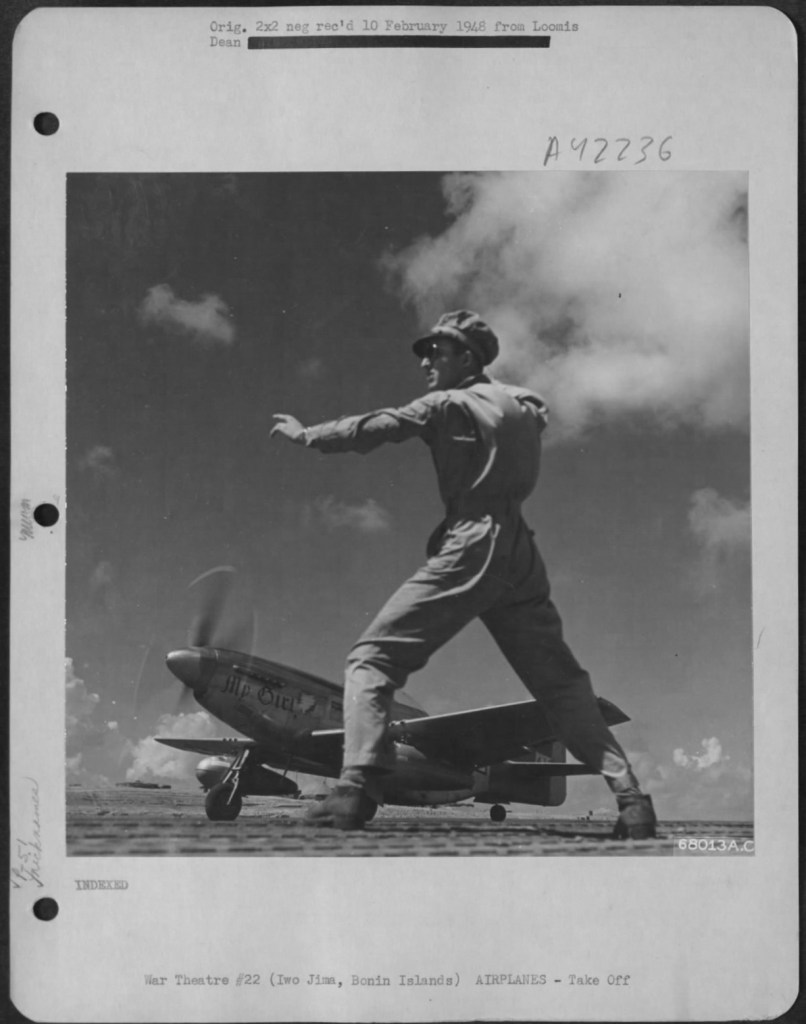
516 “My Girl”, a 457th Fighter Squadron, 506th Fighter Group P-51D-20-NA Mustang (Serial No. 44-72580) loaded with 110 gallon drop tanks awaits a signal from a ground crewman to take off from North Field on another VLR mission. This is a well known photo taken by Loomis Dean who was known for taking photos from unique angles during his time as a USAAF photographer.

USAAF/Loomis Dean/National Archives via Fold3

While the photo is well known, it is unknown who was assigned to fly “My Girl”. One would think that either 457th Fighter Squadron or 506th Fighter Group records would document who flew a particular plane, but often that is not the case. Most of what we know about who was assigned to fly a particular plane is based on photographs and recollections of pilots and ground crew. If those recollections were not written down, they are now lost as there are no surviving 457th FS pilots or ground crew.

I am unaware of any decals which were produced for “My Girl”.

Photo(s) of the Week; Mission Prep for April 19, 1945 VLR Strike Mission

USAAF/National Archives via Fold3

Armorers unpack 50 caliber ammunition from cases to be loaded into a 46th Fighter Squadron, 21st Fighter Group Mustang in preparation for the April 19, 1945 VLR strike mission against Atsugi Naval Airfield near Tokyo. Two Consolidated PB4Y-2 Privateer patrol bombers are in the background on Central Field.