Along with the release of their 1/48th decal sheet for Iwo Jima VLR Mustangs (48029), DKdecals also recently released a new 1/72 scale decal sheet covering the Iwo Jima VLR Mustang groups. There are decals for 19 VLR Mustangs. Each squadron is covered with decals for two planes, and the majority of the planes covered on this decal sheet have not been covered previously by either kit manufacturers or the after market decals manufacturers in 1/72nd scale. Again, nice to see lesser known planes covered by an after market decal manufacturer.
DKdecals
The painting and decal placement guide is nicely done. The nineteen VLR Mustangs represented on this sheet are as follows:
77 “San Antonia Rose”; 45th FS, 15th FG; P-51D-20-NA, 44-63438; flown by 2d Lt. Douglas Reese. 2d Lt. Reese scored single confirmed victories on June 26th, a Kawasaki Ki-61 Tony, and July 8th.
114 “Dear Edna”; 78th FS, 15th FG; P-51D-20-NA, 44-63967; flown by 1st Lt. Frederick A. Bauman. Lt. Bauman was credited with one aerial victory on the June 10, 1945 mission to Atsugi Airdrome near Tokyo.
124 “Button – II”; 78th FS, 15th FG; P-51D-20-NA, 44-63353; flown by 1st Lt. Doyle T. Brooks, Jr. 1st Lt. Brooks was credited with shooting down two Mitsubishi A6M Zeros on the June 10, 1945, VLR mission to the Tokyo area.
157 “Daisey Mae”; 47th FS, 15th FG; P-51D-20-NA, 44-63395; flown by Flight Officer John W. Googe.
176 “Moonbeam McSwine”; 47th FS, 15th FG; P-51D-20-NA, 44-63420; flown by Captain Eurich L. Bright. Captain Bright scored his first three victories on the April 7, 1945, VLR mission to Tokyo; a Kawasaki Ki-45 Nick, a Kawasaki Ki-61 Tony, and a Mitsubishi A6M5 Zero. Captain Bright scored again on the May 25, 1945 VLR mission.
200 “Miss Gene V”; 46th FS, 21st FG; P-51D-20-NA, 44-63775; flown by Major Fred A. Shirley, commander of the 46th FS. Major Shirley scored his first two victories on the April 12, 1945, VLR mission to Tokyo shooting down a Kawasaki Ki-45 Nick and a Mitsubishi J2M Jack, followed by two more Mitsubishi J2M Jacks on the April 22, 1945, VLR mission to Nagoya.
235 “Slow Roll”; 46th FS, 21st FG; P-51D-20-NA, 44-63891; flown by 2nd Lt. John W. Brock. Lt. Brock was credited with three aerial victories, his first on April 12, 1945, and the second and third on July 9, 1945.
250 “Dede Lou”; 72nd FS, 21st FG; P-51D-20-NA, 44-63733; flown by Major Paul W. Imig, commander of the 72nd FS.
264 “Marsha Ann”; 72nd FS, 21st FG; P-51D-20-NA, 44-63981; flown by 1st Lt. Jacob W. Gotwals. 1st Lt. Gotwals sole aerial victory (a Nakajima Ki-44 Shoki) was achieved on the first ever VLR mission on April 7, 1945, to Tokyo.
300 “My Achin!Ass”; 531st FS, 21st FG; P-51D-25-NA, 44-73623; flown by Major Harry C. Crim. Major Crim was the commander of the 531st FS, and the only ace of the 21st FG.
302 “Joy’s Boy”; 531st FS, 21st FG; P-51D-20-NA, 44-63910; flown by Captain Robert Mallin.
501; 457th FS, 506th FG; P-51D-25-NA, 44-72640; flown by Captain Evelyn Neff. Very nice nose art.
522 “Buzz Buddy”; 457th FS, 506th FG; P-51D-25-NA, 44-72876. It is unknown who was assigned to fly “Buzz Buddy”. However, it is known that 1st Lt. Chauncey A. Newcomb scored two aerial victories while flying “Buzz Buddy”. 1st Lt. Newcomb was actually assigned to 514 “Erma Lou” along with 1st Lt. Francis “Frank” Albrecht. It was not uncommon for pilots to fly VLR missions in planes they were not assigned to.
550 “Madam Wham-Dam”; 458th FS, 506th FG; P-51D-25-NA, 44-72607; flown by Major Harrison E. Shipman; commander of the 458th FS. “Madam Wham-Dam” was lost on the June 1, 1945, Black Friday mission with Lt. Col. Harvey J. Scandrett at the controls.
575 “My Madge/Julia’ll Fool Yer”; 458th FS, 506th FG; P-51D-20-NA, 44-72602; flown by Captain G. Marcott.
616 “Shanghai Lil”; 462nd FS, 506th FG; P-51D-20-NA, 44-72588; flown by 1st Lt. Darrell Bash and 1st Lt. Edward J. Linfante. 1st Lt. Bash was credited with shooting down a Kawasaki Ki-61 Tony over Yokohama on June 10, 1945.
643 “Providence Permitting”; 462nd FS, 506th FG; P-51D-25-NA, 44-72855; flown by 1st Lt. Allen F. Colley and 1st Lt. Leonard A. Dietz.
“Darlin’ Ruthie”; unit unknown; P-51D-20-NA, 44-72570; flown by Lt. M. Lerret.
DKdecalsDKdecals
The decals are in register and the artwork is very well done. The decals are recommended for all 1/72 North American P-51D Mustangs kits (Academy, Airifx, Hasegawa, and Tamiya). If you are going to use the decals for 550 “Madam Wham-Dam”, the tail stripes are designed for the Tamiya kit.
Since there are not a lot of decals for VLR Mustangs in 1/72nd scale, this decal sheet is highly recommended. Kudos to DKdecals!
DKdecals recently released a new 1/48 scale decal sheet specifically covering the three Iwo Jima VLR Mustang groups. There are decals for 9 VLR Mustangs; one plane from each squadron, and the majority of the planes covered on this decal sheet have not been covered previously by either kit manufacturers or the after market decals manufacturers . Again, nice to see lesser known planes covered by an after market decal manufacturer.
DKdecals
The painting and decal placement guide is nicely done. The nine VLR Mustangs represented on this sheet are as follows:
77 “San Antonia Rose”; 45th FS, 15th FG; P-51D-20NA, 44-63438; flown by 2d Lt. Douglas Reese. 2d Lt. Reese scored single confirmed victories on June 26th, a Kawasaki Ki-61 Tony, and July 8th.
124 “Button – II”; 78th FS, 15th FG; P-51D-20NA, 44-63353; flown by 1st Lt. Doyle T. Brooks, Jr. 1st Lt. Brooks was credited with shooting down two Mitsubishi A6M Zeros on the June 10, 1945, VLR mission to the Tokyo area.
157 “Daisey Mae”; 47th FS, 15th FG; P-51D-20NA, 44-63395; flown by Flight Officer John W. Googe.
200 “Miss Gene V”; 46th FS, 21st FG; P-51D-20NA, 44-63775; flown by Major Fred A. Shirley, commander of the 46th FS. Major Shirley scored his first two victories on the April 12, 1945, VLR mission to Tokyo shooting down a Kawasaki Ki-45 Nick and a Mitsubishi J2M Jack, followed by two more Mitsubishi J2M Jacks on the April 22, 1945, VLR mission to Nagoya.
264 “Marsha Ann”; 72nd FS, 21st FG; P-51D-20NA, 44-63981; flown by 1st Lt. Jacob W. Gotwals. 1st Lt. Gotwals sole aerial victory (a Nakajima Ki-44 Shoki) was achieved on the first ever VLR mission on April 7, 1945, to Tokyo.
302 “Joy’s Boy”; 531st FS, 21st FG; P-51D-20NA, 44-63910; flown by Captain Robert Mallin.
501; 457th FS, 506th FG; P-51D-25NA, 44-72640; flown by Captain Evelyn Neff. Very nice nose art.
550 “Madam Wham-Dam”; 458th FS, 506th FG; P-51D-25NA, 44-72607; flown by Major Harrison E. Shipman; commander of the 458th FS. “Madam Wham-Dam” was lost on the June 1, 1945, Black Friday mission with Lt. Col. Harvey J. Scandrett at the controls.
616 “Shanghai Lil”; 462nd FS, 506th FG; P-51D-20NA, 44-72588; flown by 1st Lt. Darrell Bash and 1st Lt. Edward J. Linfante. 1st Lt. Bash was credited with shooting down a Kawasaki Ki-61 Tony over Yokohama on June 10, 1945.
DKdecalsDKdecalsDKdecals
The decals are in register and the artwork is very well done. My only comment is on the decals for 616 “Shanghai Lil”. DKdecals has done the name in black and have decals for both sides of the nose. Over the years, there has been two other decal sheets with different colors for the name. SuperScale Decals issued a sheet with “Shanghai Lil” (48-1203) that has the name in yellow and outlined in black, which is clearly not supported by the photograph below. The decals that are included with the book, “506th Fighter Group: The History of the 506th Fighter Group, Iwo Jima1945”, has the name in red. Is the name in red or black? Very hard to tell from a black and white photo so your guess is as good as mine.
616 “Shanghai Lil” (506th Fighter Group Association)
The photo below would support that the name only appeared on the left side of the nose. However, was the photo below taken before nose art was applied to the plane? Is there a photo showing the name appearing on the right side of the nose? Good questions that I do not have answers to.
616 “Shanghai Lil” (506th Fighter Group Association)
DKdecals is putting out some really nice decal sheets. If you are interested in building a lesser known Iwo Jima VLR Mustang with some really nice markings, this decal sheet is highly recommended. Kudos to DKdecals!
Sometimes during the frenzy of aerial combat with multiple dogfights, a fighter pilot is lost without the certainty as to what actually occurred. Even with squadron mates in close proximity, sometimes the cause of a loss cannot be conclusively determined. Theories and speculation are advanced without a clear answer. This is never more evident than a study of the loss of the 457th Fighter Squadron’s Operations Officer, Captain John W.L. Benbow, who went missing in action during a VLR strike mission over Japan seventy-five years ago. The mystery surrounding the loss of Captain Benbow is more about what we don’t know, than what we know.
Captain Benbow was lost during a VLR strike mission to Nagoya conducted by the 21st and 506th Fighter Groups on July 16, 1945. The mission objective was to strafe airfields in the Nagoya/Ise-Wan area. Captain Benbow, was flying second element leader in his flight (Green Flight). His wingman was 2nd Lt. Joseph D. Winn. Captain William B. Lawrence, Jr. was the flight leader, and his wingman was 1st Lt. Ralph Gardner.
Captain John W.L. Benbow (via Dr. John Benbow)
In accordance with Field Order #146, forty-eight 21st FG Mustangs took off from South and Central Fields on Iwo Jima shortly before 10:15 a.m., followed by sixty-four 506th FG Mustangs which took off from North Field approximately 15 minutes later. The 21st FG was led by Lt. Col. John W. Mitchell, who at the time was the Deputy Commander of 15th FG. Lt. Col. Mitchell gained fame and notoriety for leading the long over water mission that resulted in the downing of the Mitsubishi G4M Betty transporting Admiral Isoroku Yamamoto. The 506th FG was led by Major Malcolm C. “Muddy” Waters of the 457th FS, who had been recently promoted to the Deputy Commander of the 506th.
The intended target for the 21st FG was the airfield at Kiyosu northwest of Nagoya. The airfields at Akenogahara and Suzuka, on west side of the Ise-Wan (Bay of Ise) were the intended targets of the 506th FG. The 21st FG reached the Japanese home islands around 1:25 p.m. Iwo Jima time, with the 506th FG some ten minutes behind.
The 72nd FS was lead squadron for the 21st FG with the 46th FS following; the 72nd at 11,000 feet and the 46th at 10,000 feet. The 531st FS provided top cover at 12,000 feet. Prior to reaching Kiyosu, the 21st FG encountered an indeterminate number of Japanese fighters between Tsu and Suzuka. Altogether, the 21st FG pilots reported seeing Mitsubishi A6M5 Zekes, Kawanishi N1K1/2 Georges, Nakajima Ki-43 Oscars, Nakajima Ki-44 Tojos, Nakajima K-84 Franks, and Kawasaki Ki-61 Tonys. In addition, the 46th FS reported seeing a number of unidentified single engine radial fighters.
The 506th FG made landfall at about 1:35 p.m. at an altitude of 15,000 feet, and the group proceeded north and parallel to the Ise-Wan inshore. It was between Akenogahara and Tsu when bogies were called out and all three squadrons of the 506th became engaged in a running air fight. The 457th FS, which was lead squadron, ducked under some clouds and came upon dogfights between the 21st FG and the Japanese interceptors. The 506th joined in the fight which followed a pattern of searching the area and attacking the Japanese interceptors when the situation presented itself.
During the encounters with the 21st and 506th Mustangs, the Japanese fighter pilots claimed 6 Mustangs destroyed, and 5 probably destroyed. In actuality, Captain Benbow was the only American pilot lost during the mission, and only 4 Mustangs received damage during the dogfights that ensued. Exaggerated claims were common during the heat of battle, and pilots of all combatants were susceptible to submitting inaccurate claims.
The 21st FG Mission Reports noted the aggressiveness and ability of the Japanese fighter pilots, but that they lacked formation discipline, and therefore, were easy prey for the 7th Fighter Command pilots. Except for the split-S maneuver, the 21st FG Mission Reports indicate that enemy evasive action was “practically negligible”, and that IJN pilots flying Zeros and Georges did not take advantage of their planes tight turning radii when that advantage could have been used.
The 506th FG Mission Report stated that the enemy “generally was unaggressive although some attempted to fight back when caught and attacked.” The exception was an overhead attack by two Japanese interceptors on Captain Abner M. Aust, Jr.
Several 457th Fighter Squadron pilots scored victories over the Japanese interceptors. Captain Aust scored three victories, all Nakajima Ki-84 Hayates (Franks), in quick succession, and 1st Lt. Wesley A. Murphey shot down a Nakajima Ki-44 Shoki (Tojo). Captain William Lawrence also shot down an unidentified single engine Japanese interceptor, and it was during this engagement that Captain Benbow was lost. Since the circumstances of Captain Benbow’s downing or his ultimate fate were unknown, he was listed as “Missing in Action”.
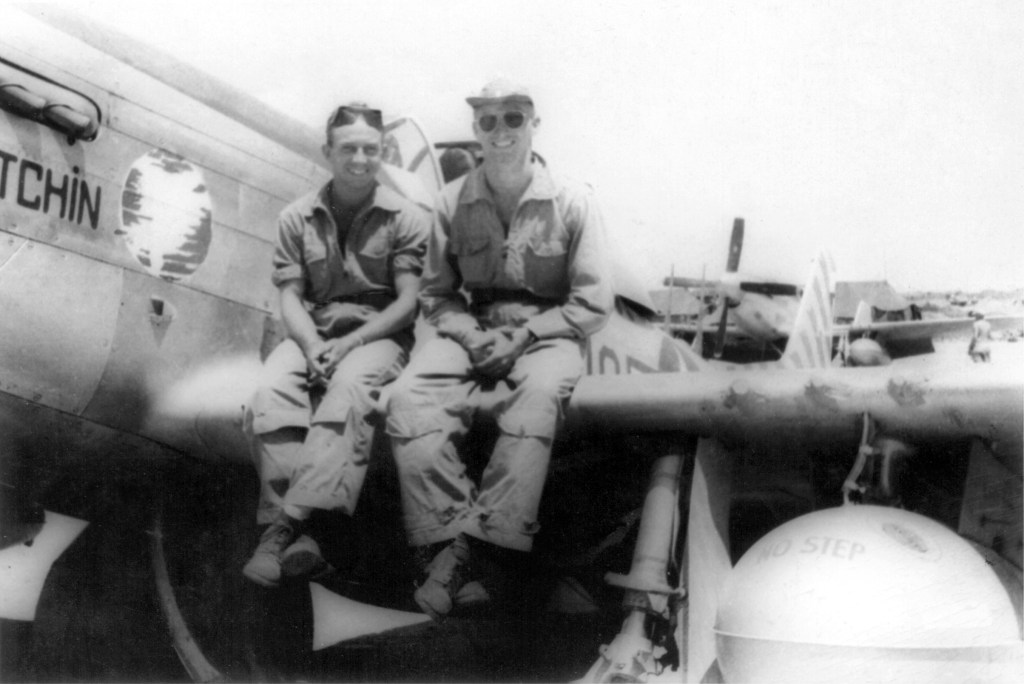
Captains John W.L. Benbow and William B. Lawrence, Jr. on the wing of 540 “Kwitcherbitchin” (via Dr. John Benbow)
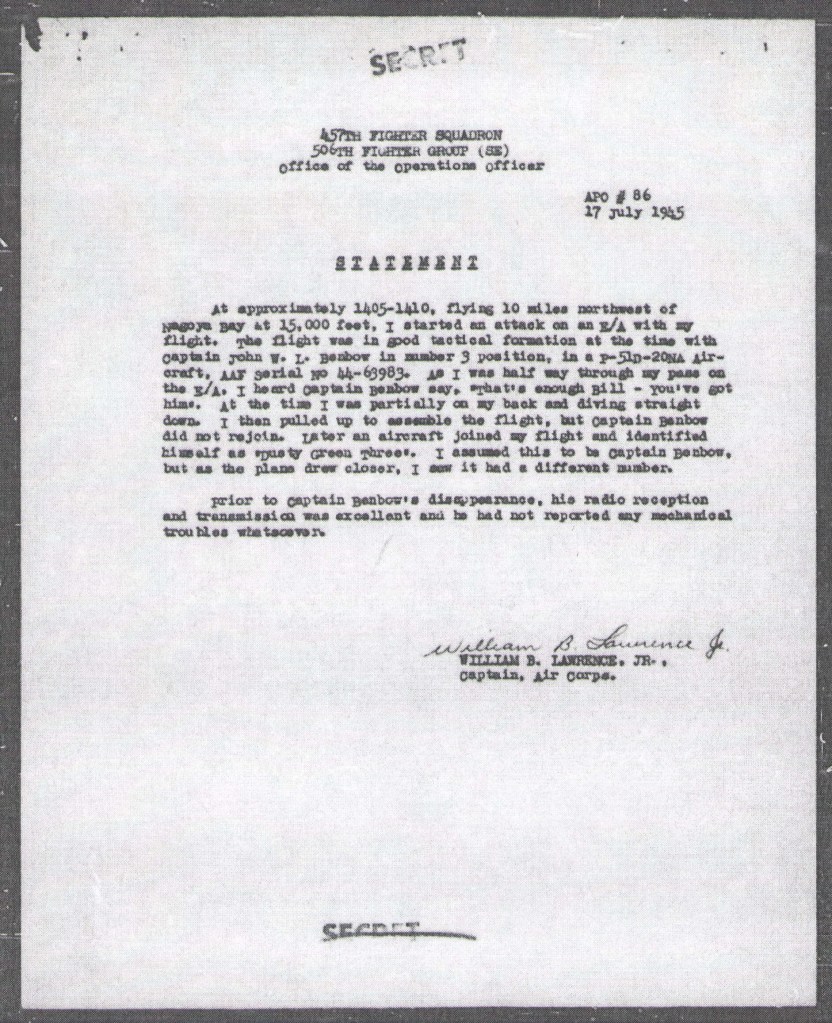
During Captain Lawrence’s engagement with the Japanese fighter that he shot down, he placed several bursts into his adversary’s plane, which began smoking. The Japanese pilot split-S’d, and Captain Lawrence’s flight followed in a dive. It appears that Captain Benbow kept formation discipline, as Captain Lawrence’s statement in the Missing Air Crew Report (MACR) indicates flight was in good tactical formation. At some point in the dive, Captain Benbow called out to Captain Lawrence saying “That’s enough Bill – you got him.” This was the last radio transmission from Captain Benbow, and when Green Flight pulled out of its dive, Captain Benbow was not to be found. Basically, Captain Benbow was there one moment; gone the next. No 7th Fighter Command pilot saw what happened to Captain Benbow; not his wingman 2nd Lt. Winn; and not Captain Lawrence’s wingman, 1st Lt. Gardner. The map below, which is part of Captain Benbow’s MACR, shows the two possible locations where he was last seen.
Map Attached to Captain Benbow’s MACR (USAAF/National Archives via Fold3)
Captain Lawrence’s MACR statement indicates that he was partially on his back and in a near vertical dive when he heard Captain Benbow’s last radio transmission. When Captain Lawrence pulled out the dive, Captain Benbow did not rejoin. The fact that Captain Benbow called out to Captain Lawrence “That’s enough Bill – you got him” suggests that Captain Benbow observed all of Captain Lawrence’s attack on the Japanese interceptor and followed Captain Lawrence in his dive.
Captain William B. Lawrence’s Statement to Missing Air Crew Report (USAAF/National Archives via Fold3)
The 506th Mission Report indicates that about the same time and in the same general area, another flight saw what was believed to be a P-51 “apparently in trouble going down in slow gliding turns at an estimated speed of 150 mph.” This aircraft disappeared into the clouds at about 8,000 feet. Was this Captain Benbow’s P-51?
2d Lt. Winn also issued a statement which is part of Captain Benbow’s MACR. During the dive, 2nd Lt. Winn indicates that he became separated from Captain Benbow while trying to avoid pieces of the disintegrating plane that Captain Lawrence was attacking. When 2d Lt. Winn recovered and rejoined the flight, Captain Benbow was not in sight nor could be contacted by radio.
2nd Lt. Joseph D. Winn’s Statement to Missing Air Crew Report (USAAF/National Archives via Fold3)
The 506th FG Mission Report concludes that it was possible that Captain Benbow’s plane was damaged by pieces of the disintegrating Japanese aircraft that Captain Lawrence shot down. While this is a logical conclusion to reach, especially considering 2d Lt. Winn’s statement, no one observed Captain Benbow’s P-51 being struck by pieces from the disintegrating enemy plane. The best person in a position to observe this was Captain Benbow’s wingman, 2d Lt. Winn, but he was actively maneuvering to avoid the enemy aircraft’s debris. The 506th FG Mission Report also states that Captain Benbow “was not known to be under fire from the ground or air.”
Captain Aust was given the task of writing Captain Benbow’s wife, Maggie, that her husband did not return from the July 16th mission and was considered missing in action. Maggie Benbow wrote back to Captain Aust with questions. Captain Lawrence, because of his familiarity with the circumstances, responded. Below is his letter to Maggie Benbow.
Captain Lawrence’s Letter to Maggie Benbow (via Dr. John Benbow)
Note that Captain Lawrence suggests to Maggie Benbow that mechanical troubles may have resulted in her husband’s loss. This appears to have been comforting words to a worried wife on Captain Lawrence’s part, as Captain Lawrence’s MACR statement specifically indicates “that prior to Captain Benbow’s disappearance, his radio reception and transmission was excellent and he had not reported any mechanical troubles whatsoever.” Had Captain Benbow experienced mechanical troubles, one would think he would have radioed his squadron mates of his predicament and requested assistance to withdraw back out to sea in the hope that if he had to bail out, he would be picked up by an American submarine stationed along the return route to Iwo Jima. Because there was no radio transmission from Captain Benbow indicating that he was experiencing mechanical problems, it appears unlikely that simple mechanical failure was the cause of Captain Benbow’s downing.
In his letter, Captain Lawrence emphatically indicated that there were no other enemy planes in the area and there was no flak, so that Captain Benbow’s downing was not a result of enemy action. Were these also meant to be comforting words? In light of the fact that several Japanese pilots claimed to have shot down a 7th Fighter Command Mustang, the cause of Captain Benbow’s loss could be that he was shot down while providing mutual support to his flight.
I have been very impressed with Lifelike Decals and the decal sheets they have released over the years for Japanese Army fighter aircraft. Their decals appear to be extensively researched and based on written and photographic documentation from various sources.
First up for review is their 1/48th decal sheet for Kawasaki Ki-100 Goshikisen, both Ko and Otsu versions.
Lifelike Decals
The painting and decal placement guide is very nicely done with extensive commentary for each aircraft and references to support their choice of markings.
Lifelike DecalsLifelike Decals
The markings for the five Ki-100s are as follows:
Kawasaki Ki-100 Ib Otsu Goshikisen flown by Captain Totara Ito, 5th Sentai, 1st Chutai, Kiyosu AB, early summer 1945.
Kawasaki Ki-100 Ib Otsu Goshikisen flown by Major Yohei Hinoki, Commander of 2nd Datai, Akeno Flying School/111th Sentai, Akeno AB, July 1945. Major Hinoki dueled in the skies over the Nagoya/Bay of Ise area on July 16, 1945 with 21st and 506th FG Mustangs.
Kawasaki Ki-100 Ia Ko Goshikisen of the 59th Sentai, 3rd Chutai, Ashiya AB, October 1945.
Kawasaki Ki-100 Ia Ko Goshikisen possibly flown by the Commander of the 1st Datai, Akeno Flying School/111th Sentai, Akeno AB, July 1945. It is assumed that this was the aircraft of Major Toyoki Eto, and this Ki-100 may have been flown by Major Eto on the July 16, 1945 air combat against 21st and 506th FG Mustangs.
Kawasaki Ki-100 Ib Otsu Goshikisen flown by Major Teruhiko Kobayashi, Commander of the 244th Sentai, Chofu AB, May 17, 1945.
Lifelike Decals
This decal sheet was released in 2009 and recommended for the Hasegawa kit, but can also be used for the older Otaki/Arii kit. It still can be purchased from Lifelike Decals or many on-line hobby retailers. The decals are in register, and the markings are well done. If you are interested in building a 1/48 Kawasaki Ki-100 Goshikisen with some really nice markings, this decal sheet is highly recommended.
When you label a decal sheet “Part 1”, it is necessarily implied that there will be a “Part 2”. Will Lifelike decals follow up with an additional sheet of Ki-100 decals? I definitely hope so.
If you have either the 1/72 Aoshima, Fine Molds, RS Models Ki-100 kits, Lifelike Decals has also issued this decal sheet in that scale (72-026).
I have been researching websites that cover Japanese aviation in my quest to become better versed in the Japanese Army and Navy Air Forces that defended the Japanese Home Islands during the last months of the Pacific War. There are a number of websites on Japanese aviation just in the Japanese language. While I wish I was fluent in the Japanese language, acquiring the ability to read and speak a new language is most likely unrealistic at my age. There may be some truth to the saying you cannot teach an old dog new tricks. Or it may be that the motivation the learn a new language is just lacking. Probably more of the later than the former.
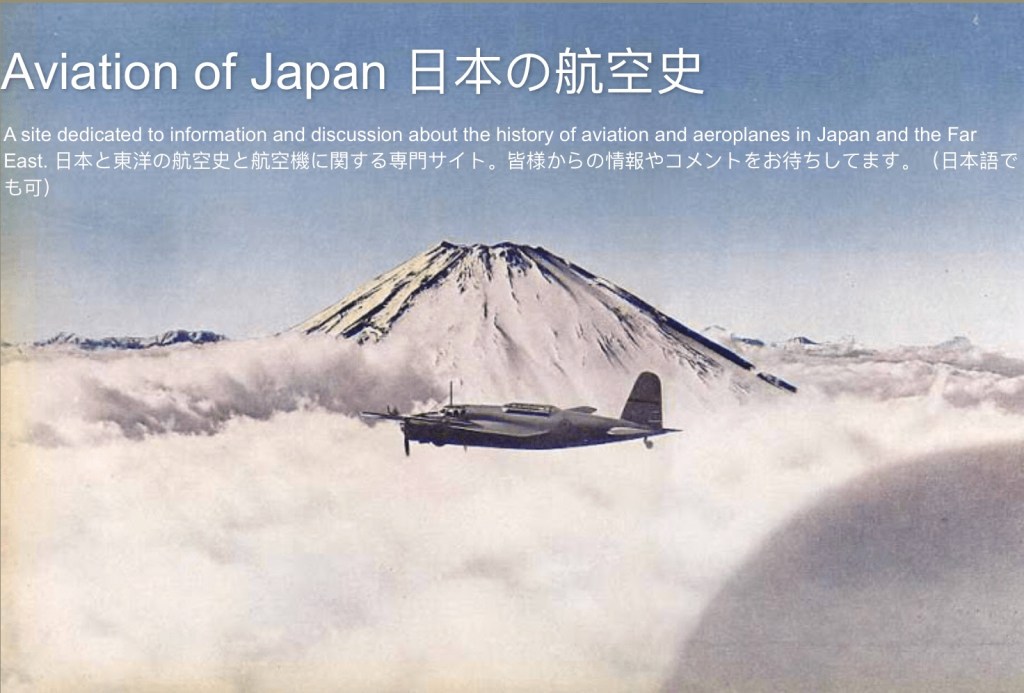
One of the most comprehensive English language websites on Japanese aviation is the Aviation of Japan blog (http://www.aviationofjapan.com/). Started in March of 2008, the blog has a tremendous amount of information of interest to historians and modelers.
The blogger (“Straggler”) is Nicholas Millman, who is one of Britain’s leading researchers of Japanese military aviation and a member of the Pacific Air War History Associates. He is the author of three books in the Osprey Aircraft of the Aces series; Ki-44 ‘Tojo’ Aces of World War 2 (100), Ki-27 ‘Nate’ Aces (102), and Ki-61 and Ki-100 Aces (114).
A significant number of posts focus on paint colors used on and in Japanese Army and Navy aircraft. This information provides greater clarity in an area that can best be described as confusing for modelers. The posts provide paint chips regarding the color, possible variations, and equivalents within recognized color standards. Mr. Millman was the expert that AK Interactive consulted when developing their Air Series acrylic paint sets for Japanese Army and Navy aircraft, and their Real Color acrylic lacquer equivalents.
In addition, Mr. Millman provides more in depth color analysis pieces in PDF that can be purchased on the website. They range from a 8 page analysis of Yellow Orange to a 46 page analysis of IJN Dark Greens, and some of the pieces are bundled. If you are striving for accuracy in your modeling of Japanese aircraft, these pieces are worth considering.
Other blog posts range from new kit reviews, nostalgic kit reviews, after market product reviews (decals, vacu-formed canopies and masks, and resin updates), book reviews, historical posts, and completed builds. Modelers can have their builds posted on the blog, and there are some truly fantastic builds presented.
There have been a tremendous number of posts to blog since 2008, and without doing the math, I would estimate that Mr. Millman averages around one post per week. To assist modelers and historians, there is a search function that will allow you to go directly to the subject you are researching. Very nice touch.
This is a fantastic blog for any modeler interested in Japanese aviation. Mr. Millman is incredibly knowledgeable on the subject and is very quick to respond to inquiries. Definitely a blog worth following.





 Iwo Jima Models